Product Overview
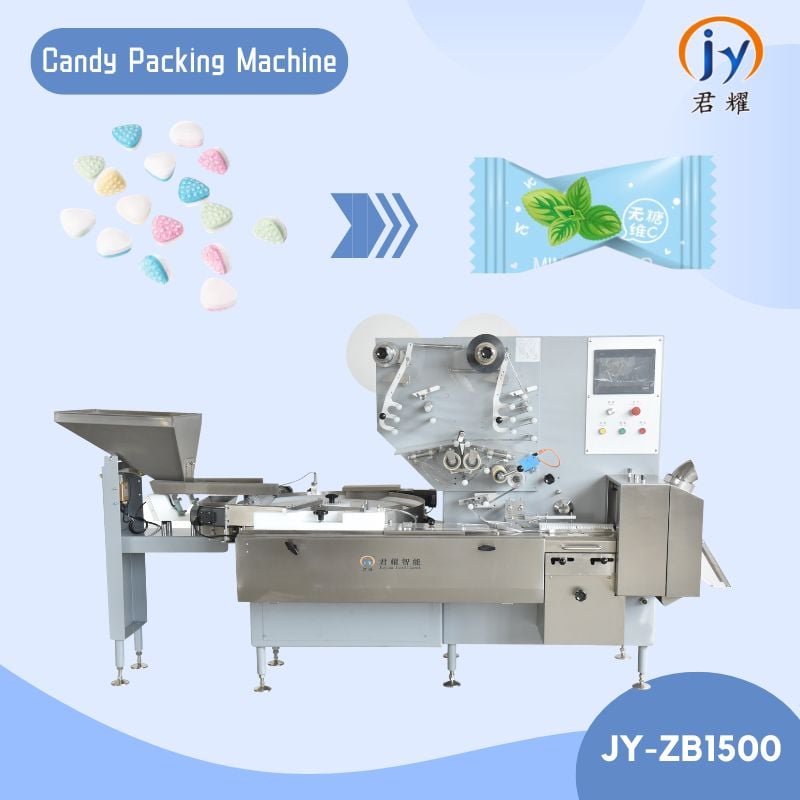
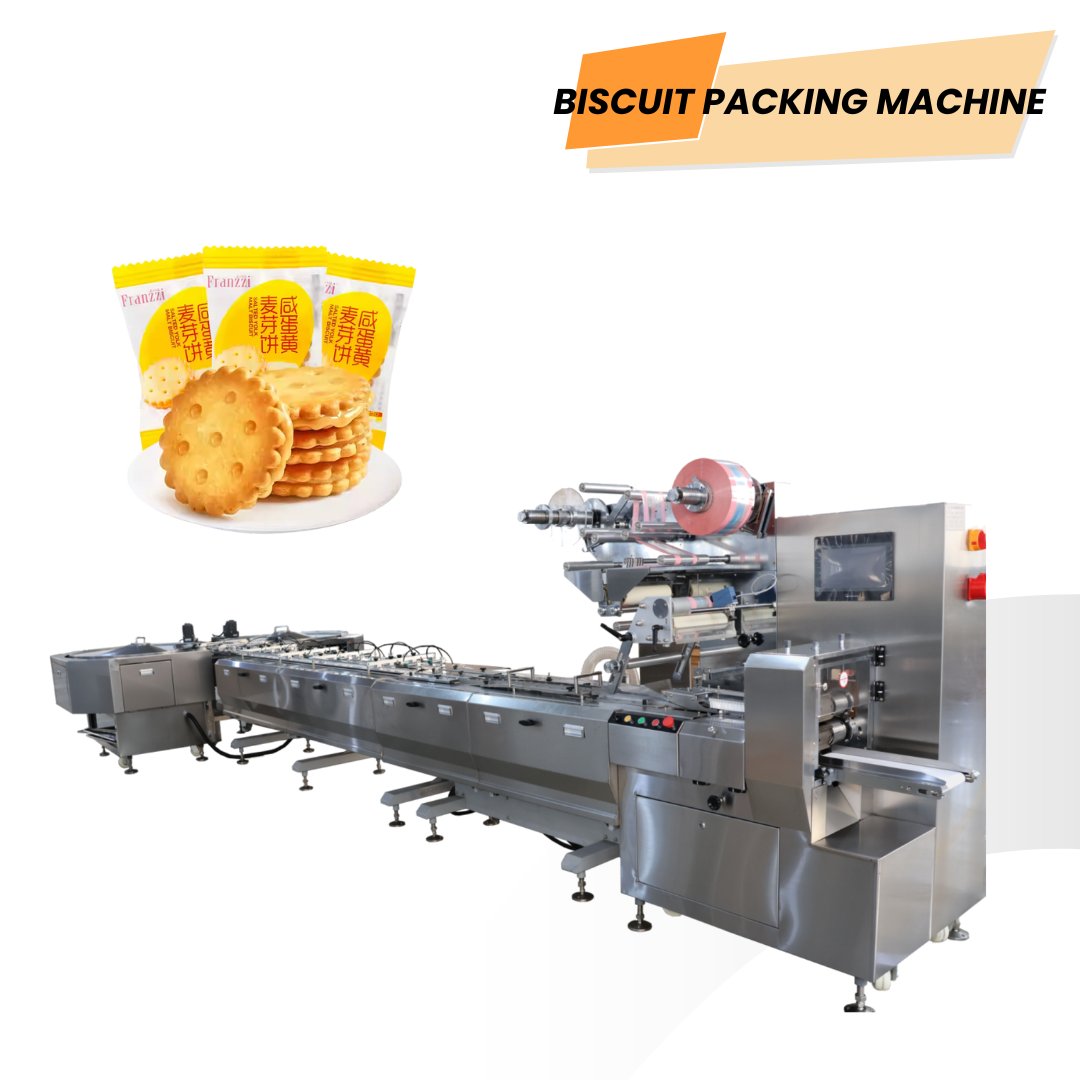
The Junyao JY-L600S is a dual-lane automatic flow packing machine engineered for biscuit and cookie manufacturers who need to double their per-machine output without doubling their floor-space investment. Designed and manufactured at Xingjunyao Intelligent Packaging Technology's 13,000 m² facility in Taizhou, Zhejiang, the JY-L600S operates two independent packaging lanes within a single machine frame, each capable of producing 50 to 150 packages per minute for a combined throughput of 100 to 300 packages per minute. The dual-lane architecture is not merely two machines bolted together — it is a genuinely integrated system where both lanes share a common PLC controller, a single HMI touch-screen interface, a unified film supply system with automatic splicing, and a synchronized cross-seal mechanism that seals both lanes' bags in a single mechanical cycle. This integrated design reduces the machine's footprint compared to two standalone wrappers by approximately 35 percent, saves approximately 40 percent on electrical power consumption compared to running two independent machines, and eliminates the synchronization complexity that operators face when trying to match the output of two separate machines feeding a common downstream carton-packing station.
Key Features
1. Dual-Lane Simultaneous Packaging with Independent Lane Control
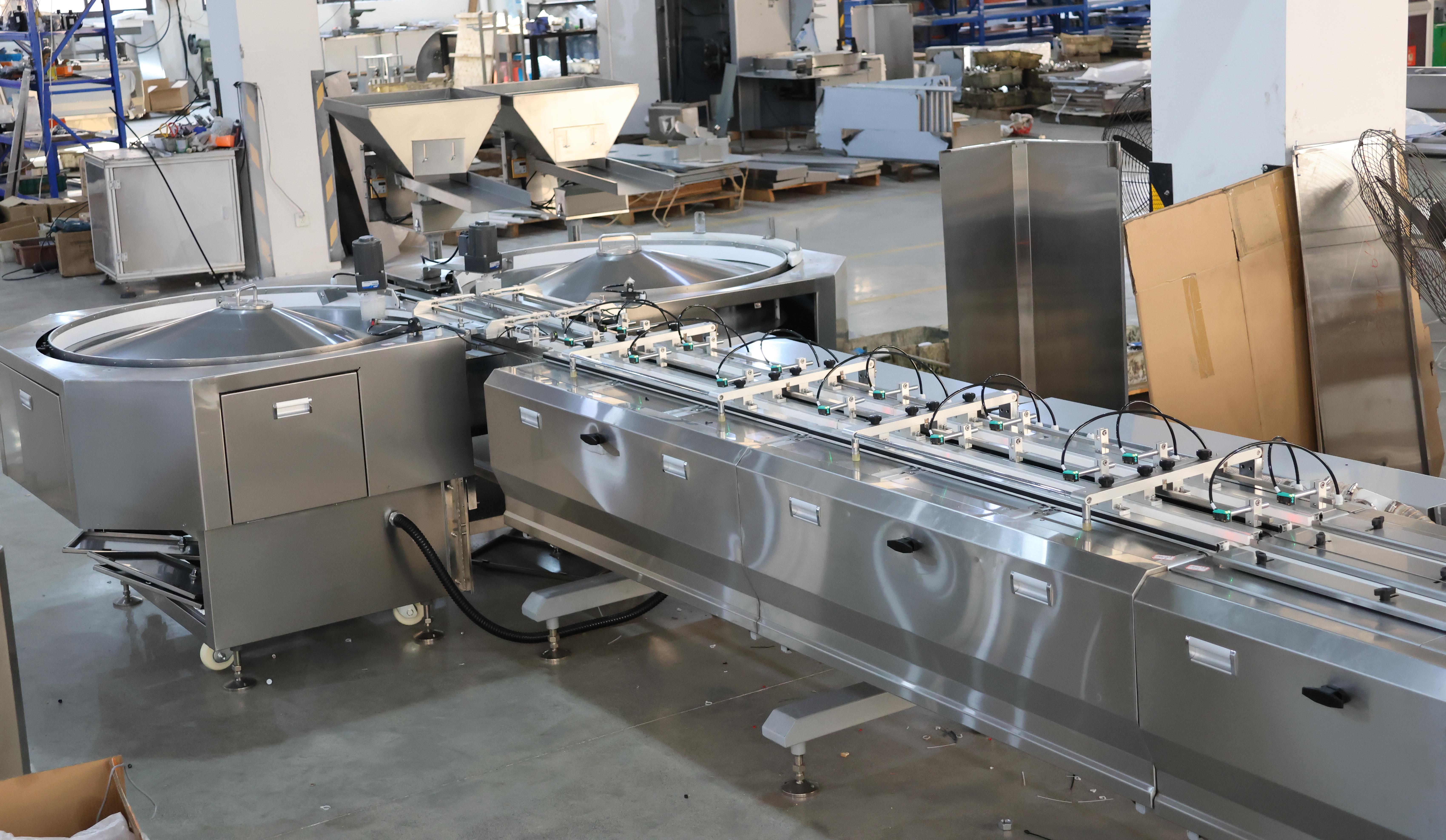
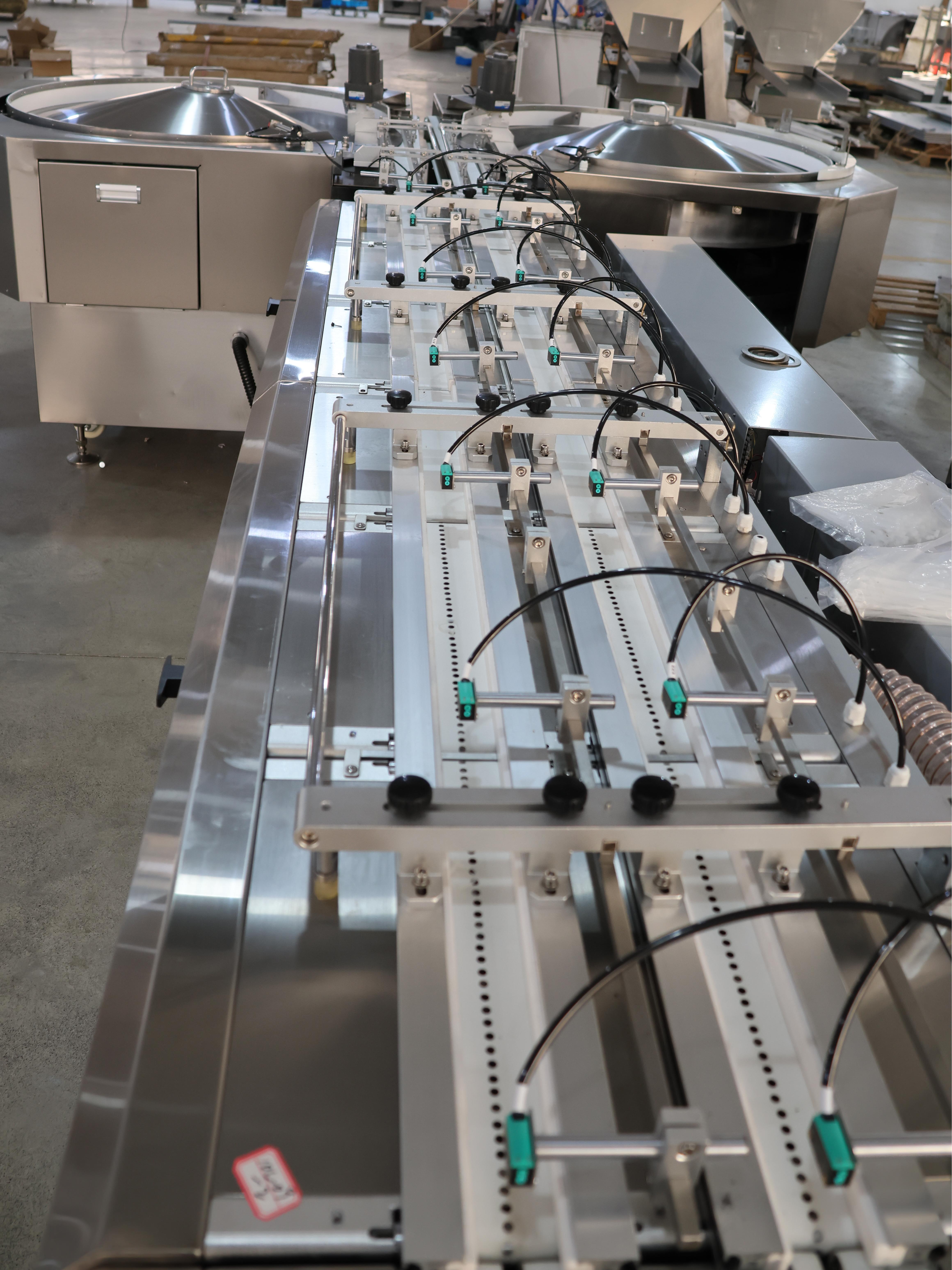
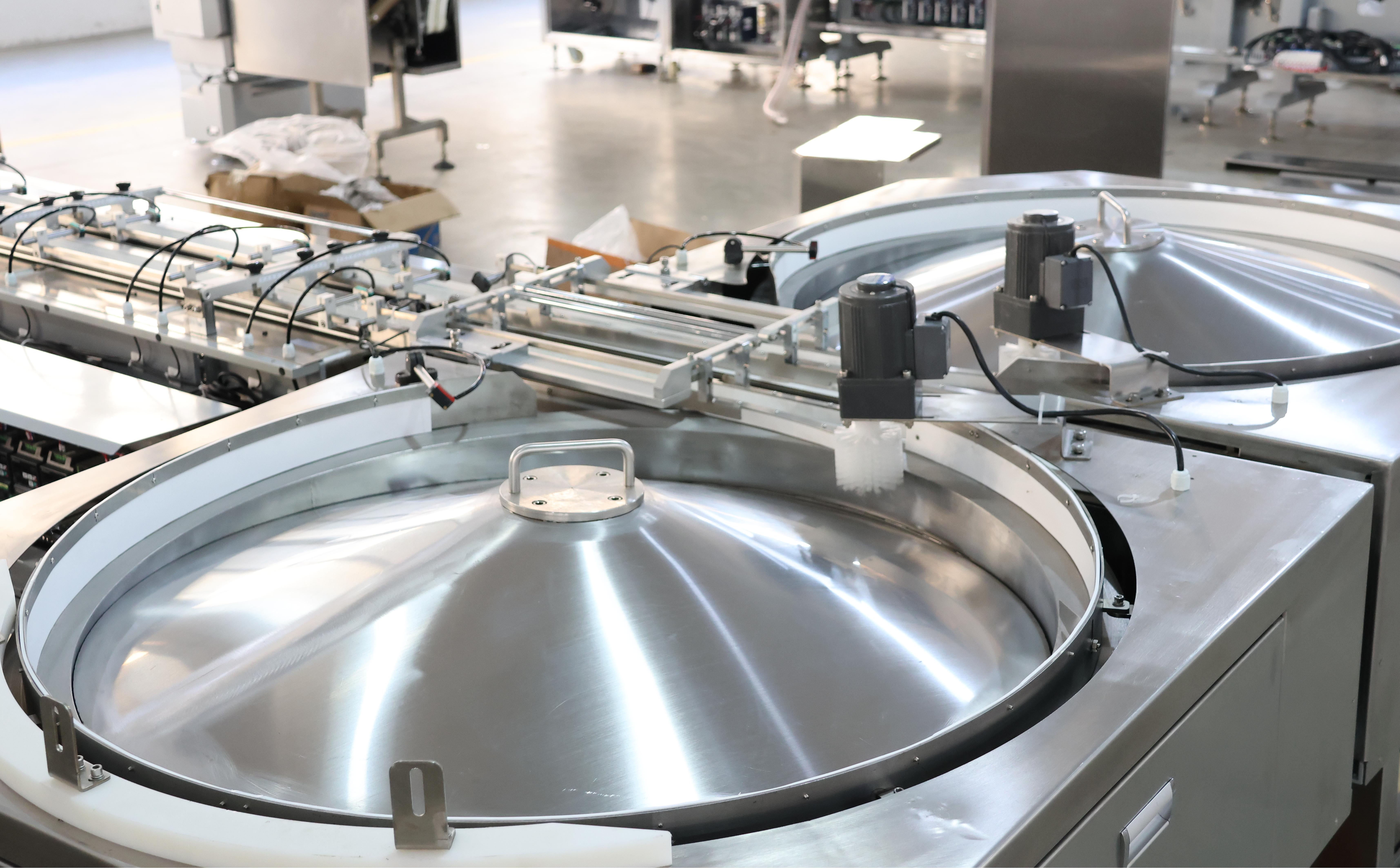
The JY-L600S houses two parallel packaging lanes — Lane A (left) and Lane B (right) — within a single machine frame. Each lane has its own infeed conveyor, forming collar, longitudinal seal roller, and product alignment mechanism, but both lanes share the cross-seal cutting unit, which uses an extended rotary seal knife that spans the full width of both lanes to seal and cut both bags in a single rotation cycle. This shared cross-seal design is the key engineering innovation that makes the JY-L600S more than two machines side by side: it ensures that both lanes produce bags with identical seal timing and seal quality, eliminating the speed-mismatch problems that arise when two independent machines feed the same downstream collector.
2. Single/Double Packaging Mode Switching via HMI
Many biscuit manufacturers produce both single-serve and multi-serve pack formats on the same production line, and the changeover between these formats on conventional single-lane machines requires manual adjustment of the infeed conveyor width, the forming collar aperture, the film width, and the cross-seal timing — a process that takes 30 to 45 minutes and generates several hundred reject bags during the tuning period. The JY-L600S eliminates this changeover delay with a programmable single/double packaging mode switching system. In single-pack mode, both lanes operate independently, each wrapping one biscuit per bag at the set speed. In double-pack mode, the PLC commands the Lane B infeed servo to synchronize with Lane A, spacing the biscuits on both lanes so that two biscuits (one from each lane) enter a single wider forming collar that produces one double-width bag containing two side-by-side biscuits.
3. Multi-Zone Sealing Temperature Control
Biscuit and cookie packaging involves a broader range of film structures than most snack categories, and the sealing requirements for each film type differ significantly.The JY-L600S addresses this diversity with a multi-zone sealing temperature control system that divides both the longitudinal seal roller and the cross-seal knife into three independently controlled heating zones — left zone (Lane A seal area), centre zone (overlap area in double-pack mode), and right zone (Lane B seal area). Each zone has its own temperature sensor, PID controller, and heating element, allowing the operator to set different temperatures for each zone when running different film types on each lane, or to set uniform temperatures across all zones when both lanes use the same film. In double-pack mode, the centre zone temperature can be increased by 10 to 15 degrees Celsius above the side zones to compensate for the increased film thickness at the double-width bag's centre seal, ensuring uniform seal strength across the full bag width without overheating the thinner side seals.
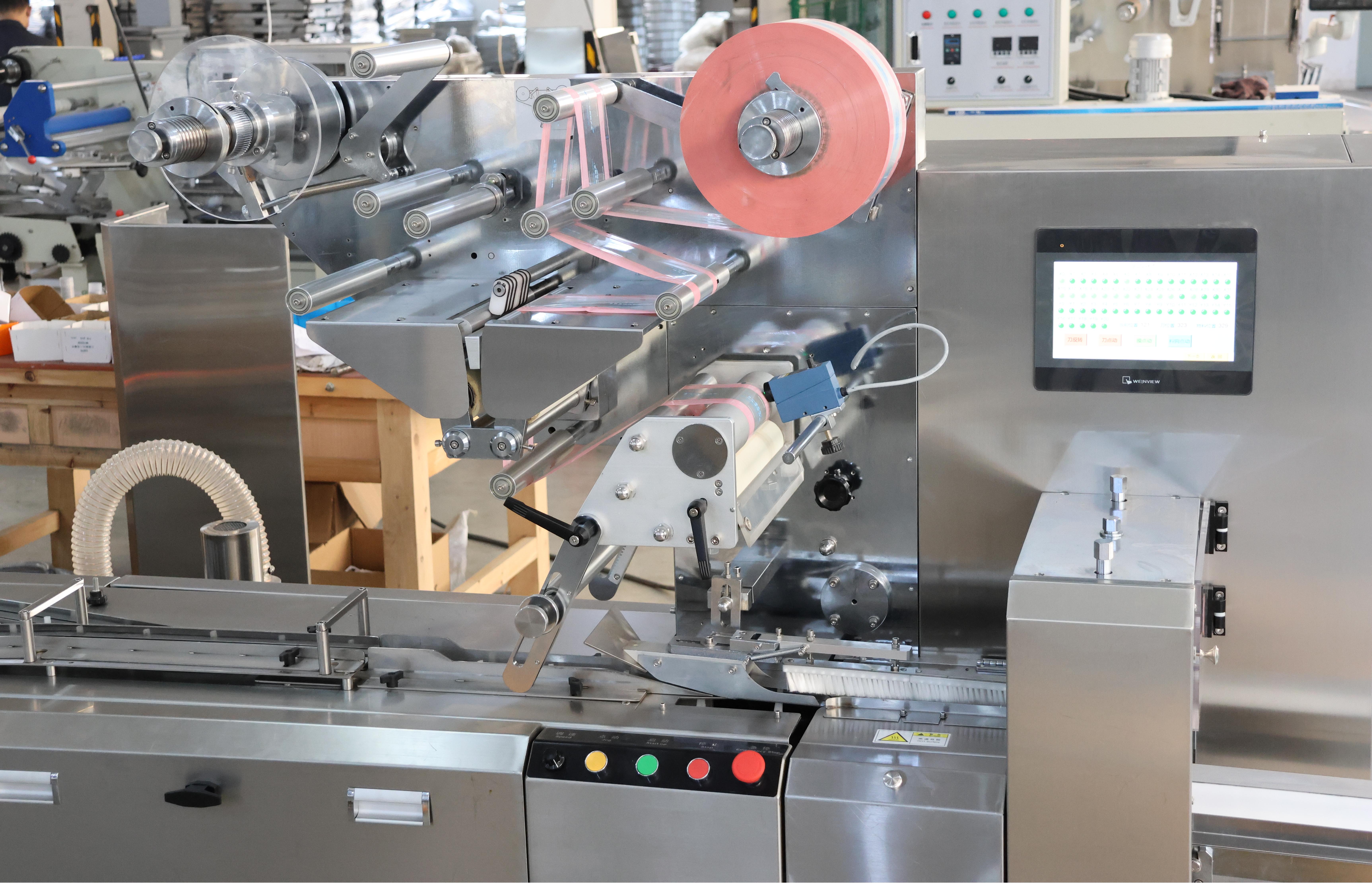
4. High-Speed Automatic Film Splicing System
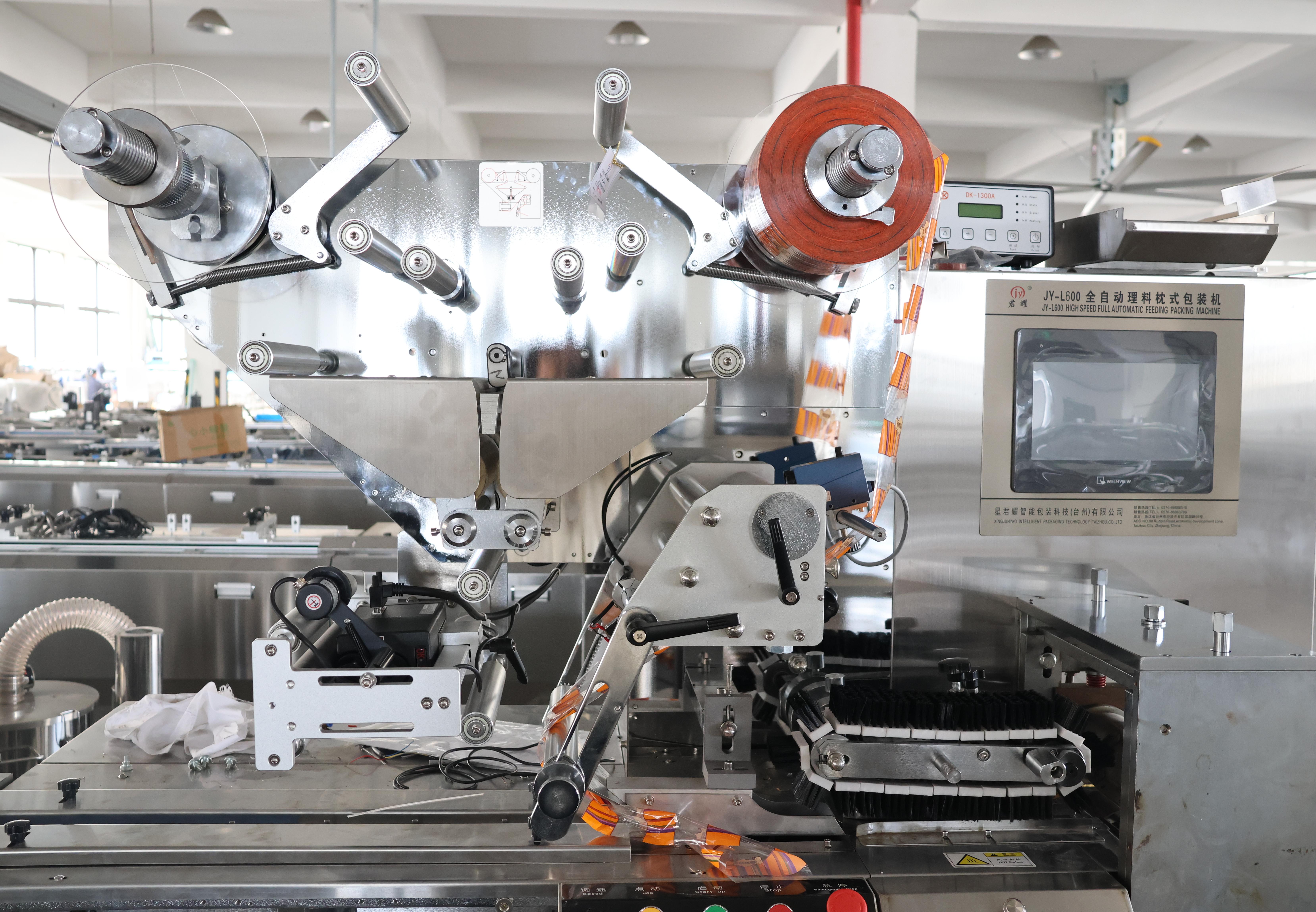
The JY-L600S integrates an automatic film splicing system that carries two full film rolls on parallel drum shafts, with a proximity sensor monitoring the primary roll's diameter. When the primary roll diameter drops below the programmed threshold (default 80 mm, adjustable), the PLC triggers an automatic splice sequence: the secondary roll servo accelerates to match the primary roll's surface speed, a thermal splice bar bonds the trailing edge of the primary roll to the leading edge of the secondary roll, and the depleted primary roll core is ejected onto a collection rack. The entire splice cycle completes in under 2 seconds without any production interruption.
5. Photoelectric Tracking with Per-Lane Registration Control
Both packaging lanes of the JY-L600S use pre-printed film with brand logos and product information that must align precisely with the sealed pillow pouch. The machine integrates two independent photoelectric registration sensors — one for each lane — that read the longitudinal cut-position marks on each lane's film web. Because the two lanes may run at different speeds in independent mode, each sensor communicates with its own servo subroutine, adjusting its lane's film feed independently without cross-interference. In double-pack mode, both sensors synchronize to the same registration mark on the single wider film web, and the PLC ensures that the wider bag's registration position aligns both lane logos within the visible front panel area.
Applications
1.Round and rectangular biscuits: Shortbread rounds, sandwich biscuits, and rectangular crackers are the JY-L600S's core application. In single-pack mode, both lanes wrap one biscuit per bag independently. In double-pack mode, two biscuits are placed side-by-side in a wider bag, creating a twin-pack format that appeals to value-conscious consumers while reducing per-unit film cost by approximately 30 percent compared to two individual single packs.
2.Cookie bars and wafer fingers: Long cookie bars that exceed 100 mm in length are wrapped in extended-length bags using the full 500 mm bag length range. In dual-lane mode, two bars can be packaged simultaneously in parallel bags, doubling the output rate without increasing the line footprint.
3.Small cakes and pastry slices: Soft cake products that cannot tolerate high mechanical stress are conveyed gently on the JY-L600S's low-friction infeed belts, with the dual-lane configuration allowing two cake rows to be packaged simultaneously while the servo-controlled cross-seal timing ensures that the seal dwell time is sufficient for the thicker cake packages without compressing the product body.
4.Multi-flavour assortment packs: Manufacturers producing multiple biscuit flavours on the same line can run different flavours on each lane — for example, chocolate flavour on Lane A and vanilla flavour on Lane B — with different printed films on each lane, creating a mixed assortment output that can be combined downstream into multi-flavour display cartons without manual sorting.

Manufacturing & Quality Assurance
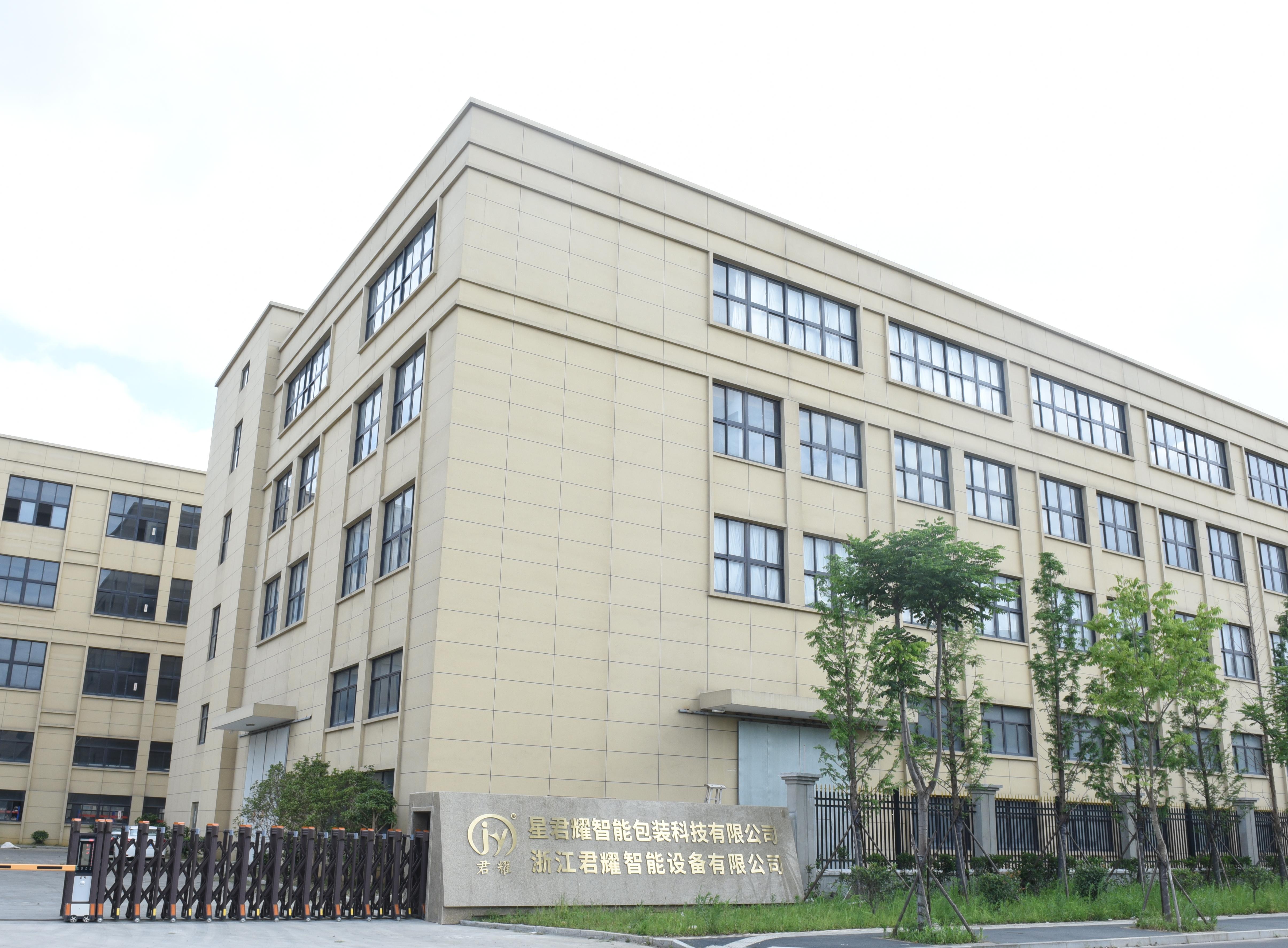
Every JY-L600S machine is manufactured at Xingjunyao Intelligent Packaging Technology's 13,000 m² production facility in Taizhou's Development Zone. The manufacturing process follows a documented quality management system that controls each production stage from raw-material inspection through final shipment. Key quality checkpoints include:
Incoming material verification: All stainless-steel frame components are verified against material certificates confirming SUS304 composition. Servo motors, PLC controllers, HMI panels, photoelectric sensors, and heating elements are tested against manufacturer datasheets before installation, with performance data recorded in the machine's build log.
Lane-by-lane functional testing: Each packaging lane is tested independently for 4 continuous hours before integration into the dual-lane assembly. This lane-level testing verifies servo response times, film feed accuracy, registration sensor performance, and seal strength for each lane's longitudinal seal roller and cross-seal zone independently, ensuring that both lanes meet identical performance standards before they are mechanically linked by the shared cross-seal knife.
Complete-machine run-off test: The assembled JY-L600S undergoes a minimum 8-hour continuous production test in both single-pack mode and double-pack mode, using actual biscuit products and production-grade film on both lanes. Recorded data includes seal integrity (peel strength greater than 3 N per 15 mm strip), registration accuracy (within plus or minus 0.5 mm per lane), mode-switching time (under 3 minutes), and combined throughput consistency (standard deviation less than 2 percent of set speed).
CE conformity assessment: Each machine is evaluated against applicable EU directives before shipment, with documented evidence of compliance retained in the technical file. Customers receive the CE declaration of conformity, the EC declaration, and installation manuals in both English and the customer's local language.


 EN
EN