Key Features
1. Dual-Mode Sealing System with Programmable Toffee and Gummy Profiles
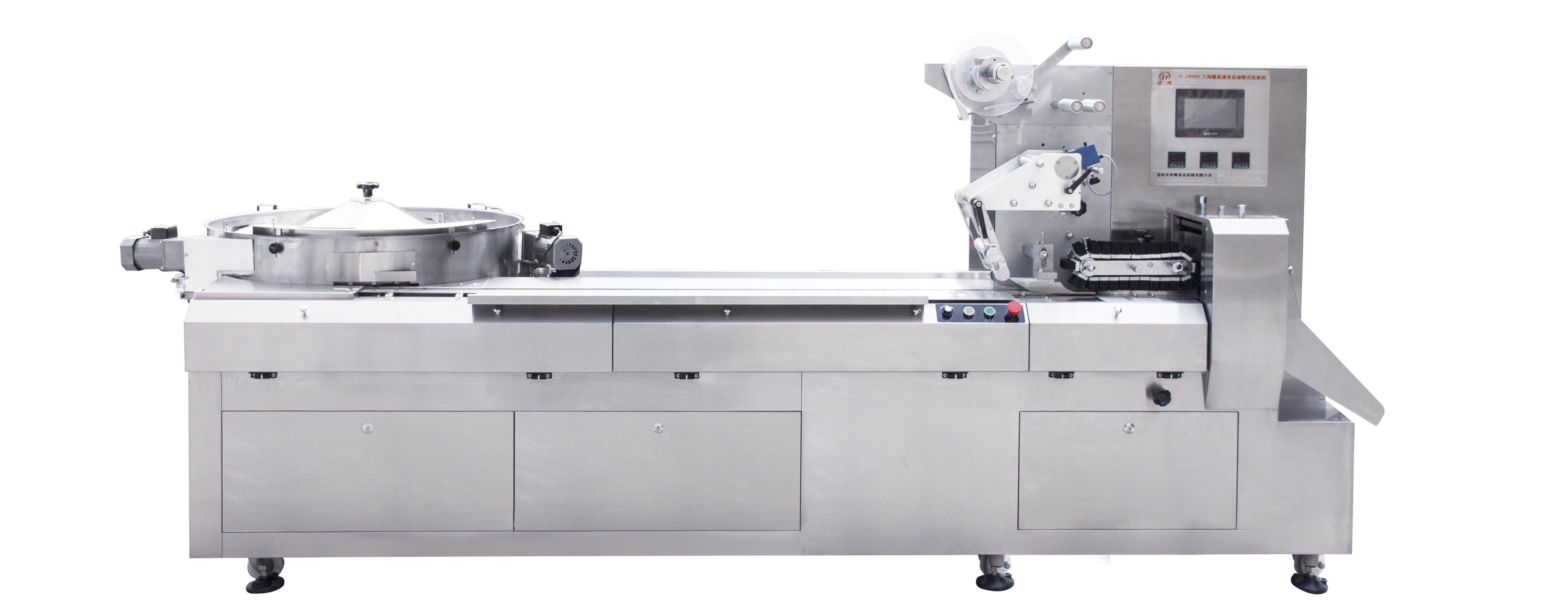
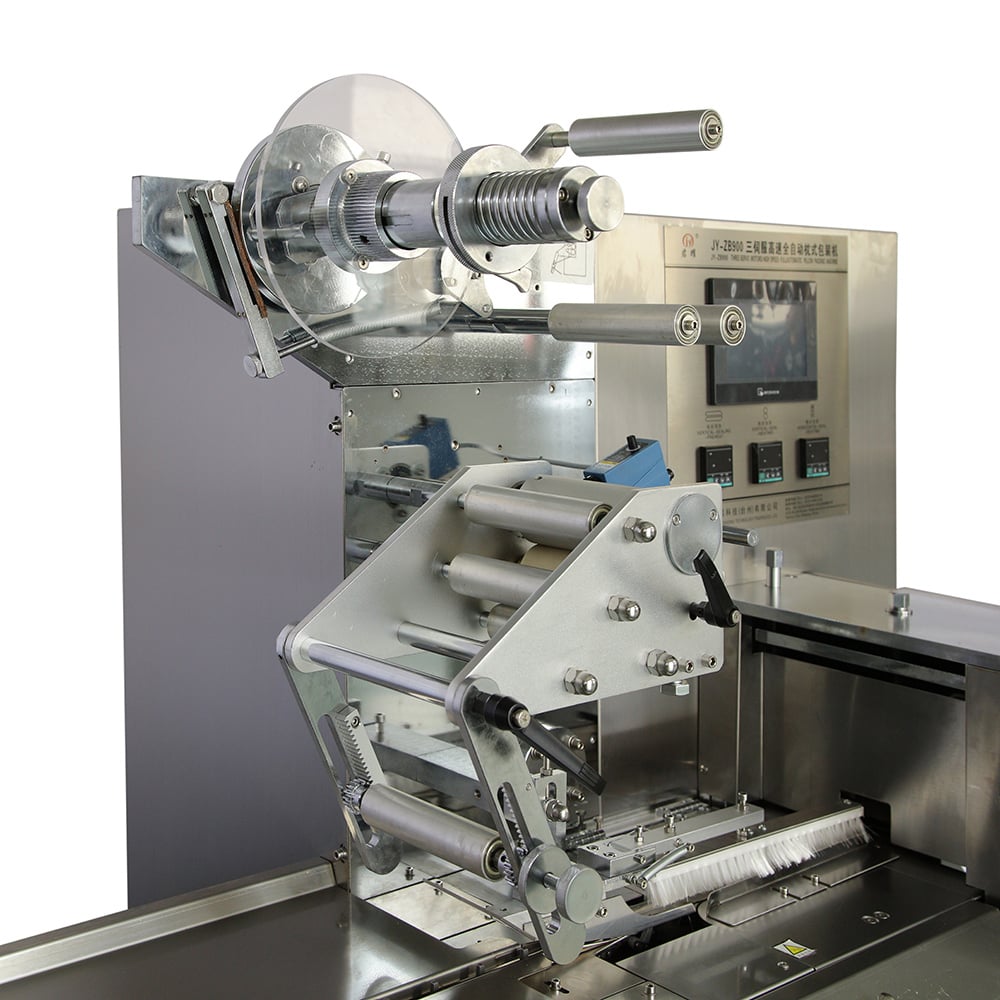
The JY-ZB500T's dual-mode sealing system is the core engineering feature that enables the machine to produce both toffee and gummy pillow packs on the same equipment without extended parameter adjustment delays. The longitudinal seal roller and the cross-seal rotary knife each feature dual-zone heating elements with independent PID controllers, allowing each zone to be set to a different temperature for different sealing requirements. In toffee mode, the PLC loads a stored recipe that sets both the longitudinal and cross-seal temperatures to the toffee range (170 to 200 degrees Celsius, adjustable per recipe), increases the servo-driven seal pressure actuators to the higher clamp force required for thick barrier laminate films (typically OPP/AL/PE or PET/AL/PE three-layer structures), and extends the cross-seal dwell time to allow deeper melt penetration through the laminate layers. In gummy mode, the PLC loads a different recipe that reduces both seal temperatures to the gummy range (110 to 140 degrees Celsius), decreases the seal pressure actuators to the lighter clamp force appropriate for thin CPP or OPP/PE films, and shortens the cross-seal dwell time to prevent overheating the thin film structure. The transition between modes is executed through the HMI recipe selection: the operator selects "Toffee Mode" or "Gummy Mode," and the PLC simultaneously adjusts all seal temperatures, seal pressures, and dwell times to the stored values, completing the transition within 2 minutes as the heating elements ramp from the previous mode's temperature to the new mode's temperature. This recipe-driven mode switching eliminates the trial-and-error tuning period that conventional machines require after a product-type changeover, reducing the reject-bag count from hundreds to fewer than 10 per mode transition.
2. Dual Film Compatibility — Heat-Seal Laminates and Twist-Wrap Films
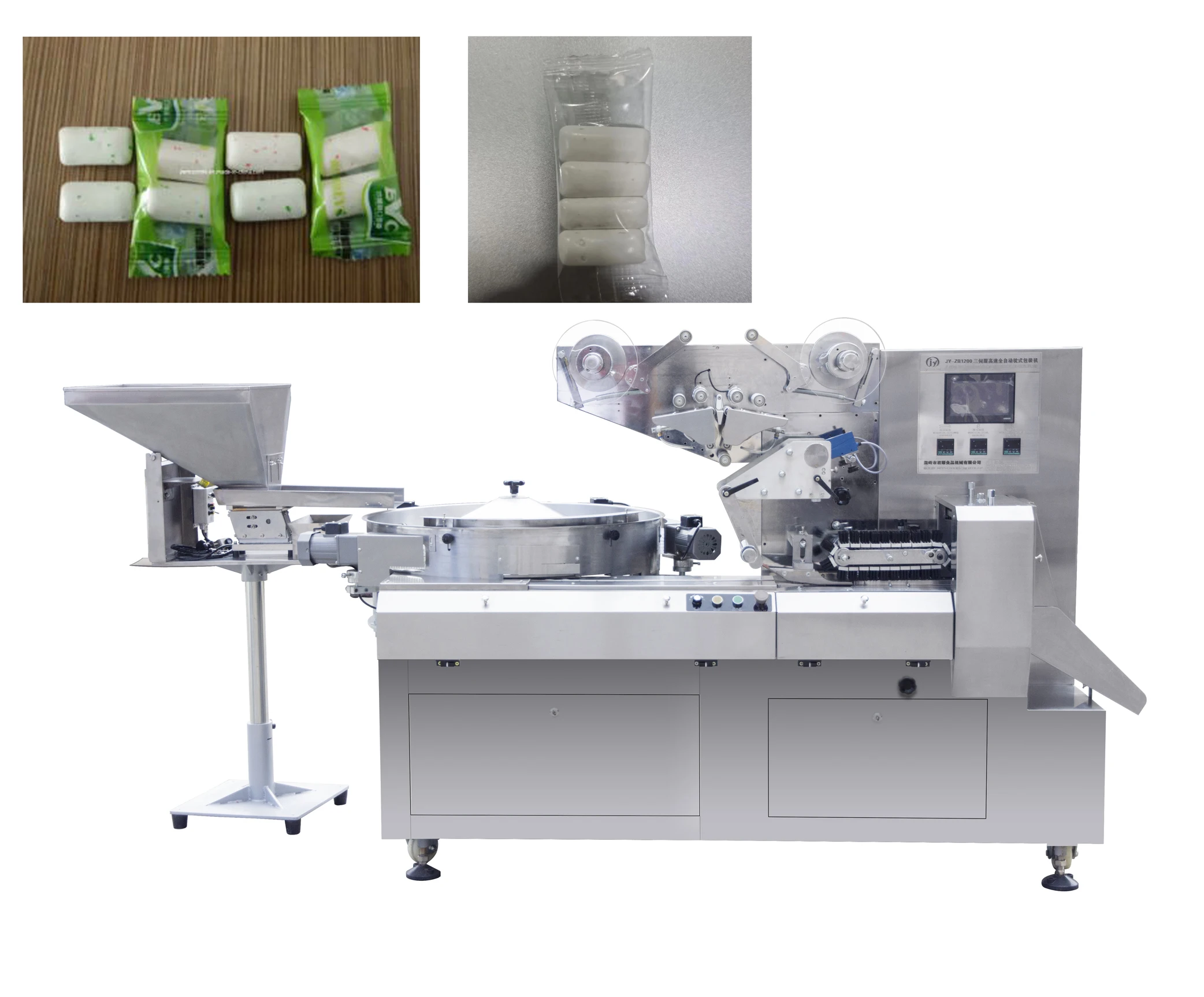
Toffee candy manufacturers frequently produce two different pack formats for the same product: pillow packs using heat-seal laminated films for retail display cartons, and twist-end packs using twist-wrap films for bulk distribution and promotional giveaway bags. Pillow packs seal the toffee in a fully enclosed bag with longitudinal and cross end-seals, while twist-end packs seal only the longitudinal seam and twist the film at both ends into a decorative spiral closure that consumers can unwrap by pulling the twisted tail. On conventional packaging lines, these two pack formats require two separate machines — a pillow wrapper and a twist wrapper — because the sealing mechanism and the film handling path differ significantly between the two formats. The JY-ZB500T integrates both packaging formats into a single machine through a dual film compatibility architecture that includes two forming collar options mounted on a quick-change bracket (one for pillow-pack film width, one for twist-wrap film width), a cross-seal mechanism with a selectable operating mode (full end-seal for pillow packs, partial end-seal plus twist mechanism for twist-end packs), and a twist-end attachment module that can be installed or removed in under 10 minutes. In pillow-pack mode, the machine operates as a standard horizontal flow wrapper, producing fully sealed pillow bags. In twist-wrap mode, the cross-seal mechanism deactivates the end-seal function and instead activates a twist-end wheel that grips the film at each end of the bag and twists it into a spiral closure, producing a traditional toffee twist-wrap appearance that many consumers associate with premium toffee brands. The twist-end wheel rotation speed and twist count (typically 3 to 5 rotations) are adjustable through the HMI, allowing the operator to produce tight twists for small individual toffee pieces or loose decorative twists for larger toffee bars. This dual-format capability eliminates the need for a separate twist wrapper machine and reduces the total equipment investment for manufacturers who produce both pillow-pack and twist-pack formats.
3. Adjustable Sealing Temperature with High-Temperature Toffee Mode
Toffee candy's butter-and-sugar composition requires a moisture barrier that only thick laminate films can provide, and these thick laminates — typically three-layer OPP/AL/PE or PET/AL/PE structures with total thickness from 60 to 120 micrometres — demand sealing temperatures in the 170 to 200 degrees Celsius range to achieve full melt penetration through all three layers. At these high temperatures, two quality risks emerge: first, the aluminium foil layer in the laminate can scorch or delaminate if the seal dwell time is too long, producing a visible burn mark on the sealed edge that consumers interpret as a product quality defect; second, the toffee product itself can begin to soften if heat transfers from the seal point through the film to the candy inside the bag, causing the toffee's surface to stick to the inner film layer. The JY-ZB500T addresses these risks with a precision temperature control system that features independently adjustable PID controllers for the longitudinal seal and the cross-seal zones, with temperature accuracy within plus or minus 1 degree Celsius across the full 100-to-200-degree range. The cross-seal dwell time is adjustable from 0.1 to 0.5 seconds, and the PLC calculates the optimal dwell time for each recipe based on the stored film thickness and structure parameters, ensuring that the seal achieves full melt penetration without exceeding the dwell time that would scorch the aluminium layer. To prevent heat transfer to the toffee product, the JY-ZB500T's cross-seal mechanism includes a cooling bar positioned immediately after the seal point that briefly contacts the sealed edge and dissipates residual heat before the bag moves downstream, preventing the sealed edge's thermal energy from radiating inward toward the toffee body. This cooling bar is active only in toffee mode (temperatures above 160 degrees Celsius) and is deactivated in gummy mode where the lower seal temperatures do not pose a heat-transfer risk.
4. Anti-Stick Coated Surfaces for Gummy Mode Operation
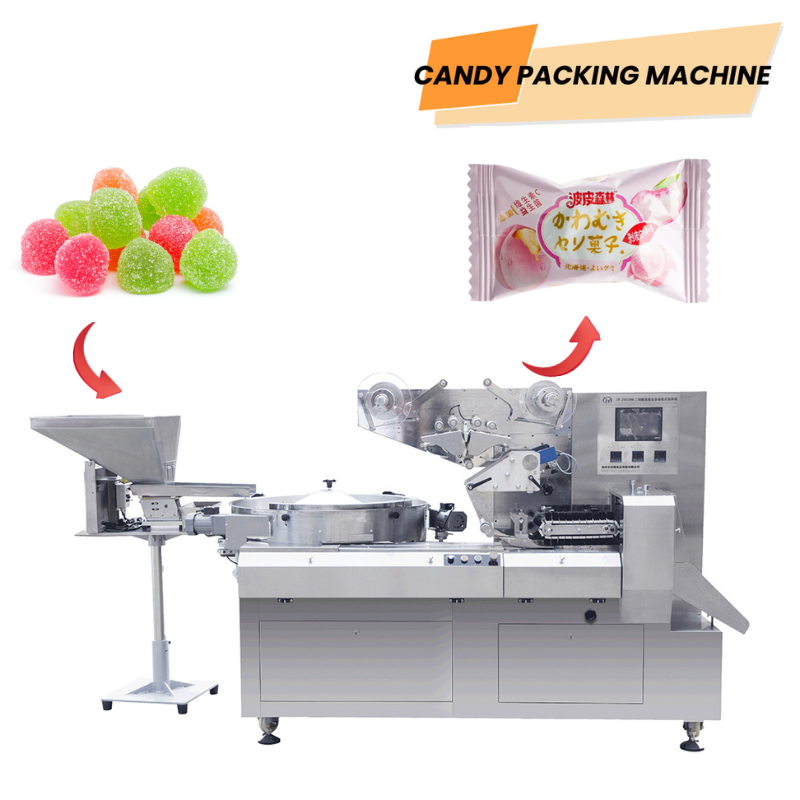
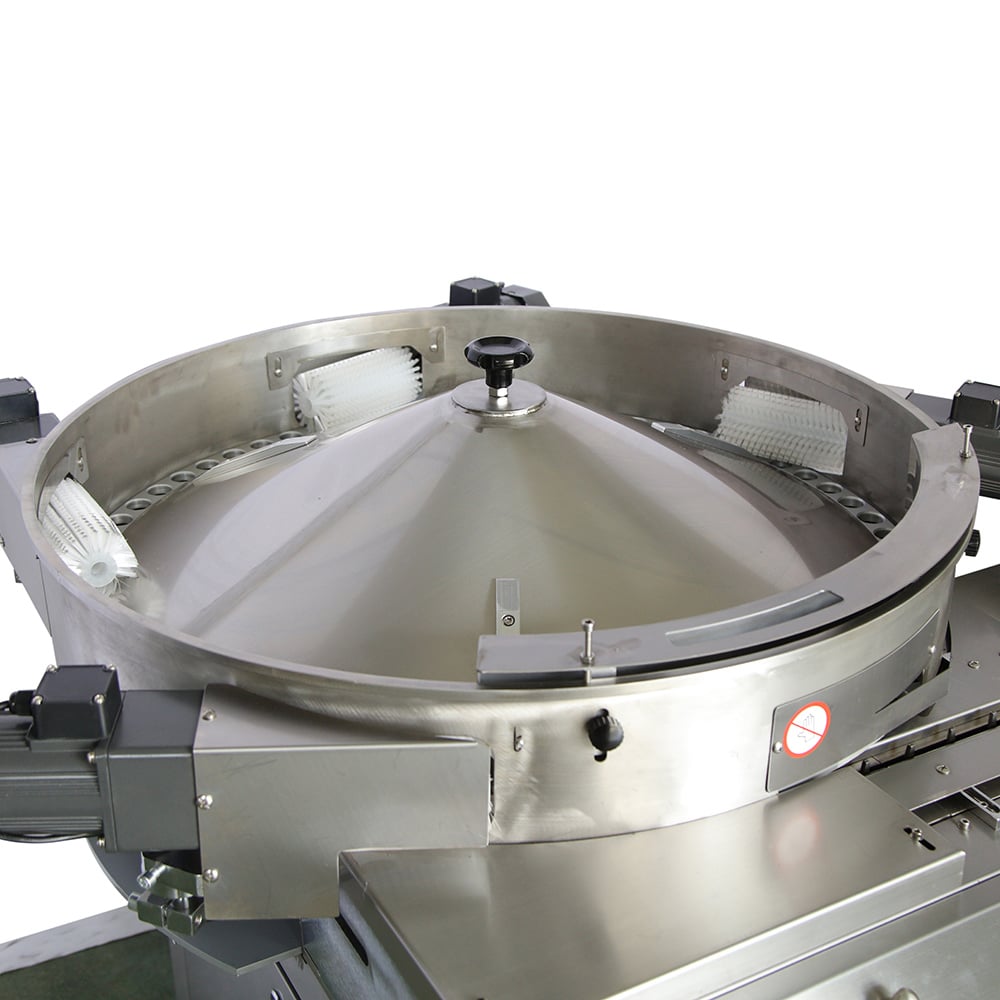
When the JY-ZB500T operates in gummy mode, the machine faces the same sticky-surface handling challenges that dedicated gummy wrappers encounter. Gummy candy surfaces contain sugars, gelatin, and fruit purees that create a sticky film on uncoated metal and plastic surfaces, causing products to slow down, rotate unpredictably, and accumulate residue that degrades machine performance over time. The JY-ZB500T incorporates the same food-grade PTFE-modified silicone anti-stick coating used on Junyao's dedicated gummy machines (the JY-ZB800G and JY-ZB600D), applied to all product-contact surfaces including the infeed conveyor belt, the sorting tray surface, the alignment guide rails, and the forming collar inner channel. In toffee mode, this anti-stick coating provides a secondary benefit: toffee candies are less sticky than gummies, but they can leave a butter-fat residue on machine surfaces during extended production runs. The anti-stick coating prevents this butter-fat residue from bonding to the machine surface, allowing operators to wipe the surfaces clean with a damp cloth in under 10 minutes during product-type changeovers — compared to the 30-minute scrub cycle required on uncoated machines to remove butter-fat residue from toffee production before switching to gummy production. The anti-stick coating is certified under EU Regulation 1935/2004 for food-contact safety and retains its properties for over 5000 operating hours before renewal.
5. Multi-Language HMI with Dual-Mode Recipe Management
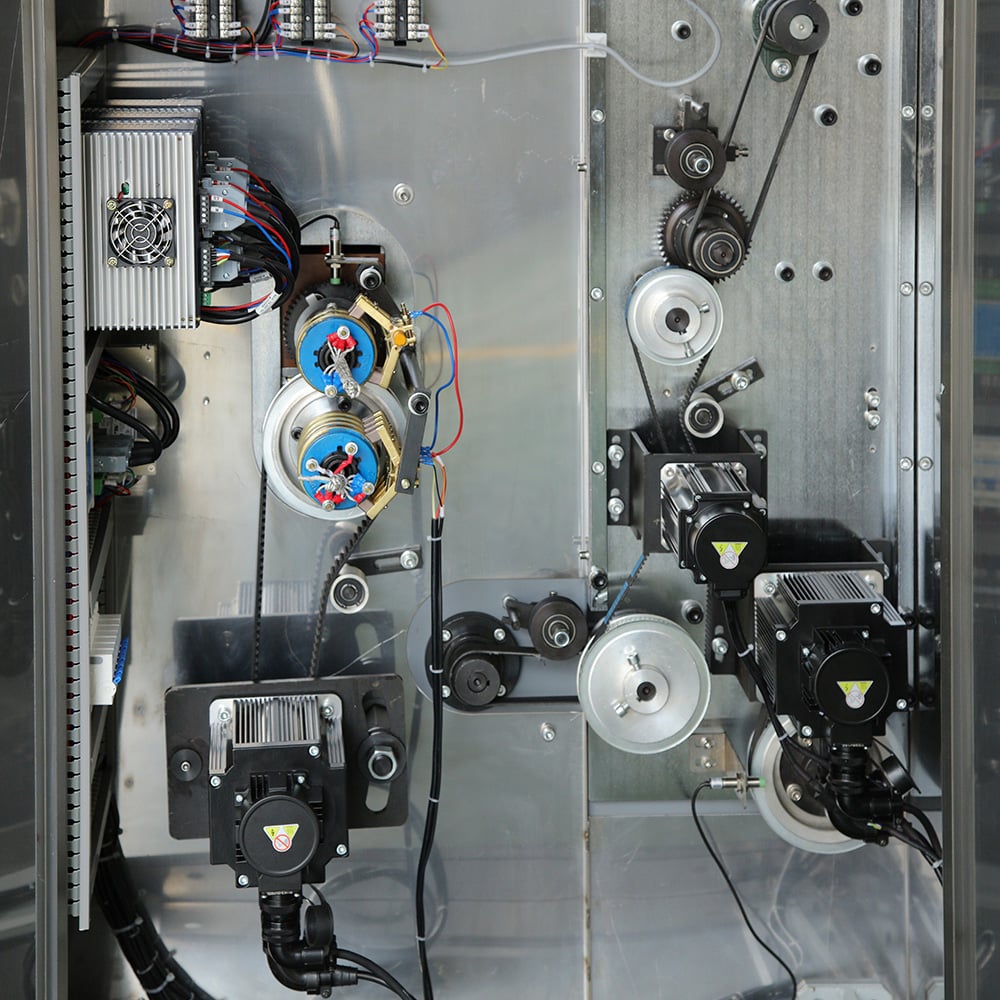
The JY-ZB500T HMI touch screen supports English, Chinese, Arabic, Russian, Spanish, French, and Portuguese, with all operational menus, alarm codes, and parameter labels displayed in the operator's selected language. Beyond the standard operational interface, the HMI includes a dual-mode recipe management system that stores complete machine configuration profiles for both toffee and gummy product types. Each recipe contains all servo speed parameters, seal temperature settings (with separate values for longitudinal and cross-seal zones), seal pressure actuator positions, cross-seal dwell time, cooling bar activation status, film type selection (heat-seal laminate or twist-wrap), twist-end parameters (twist count and wheel speed for twist-wrap mode), sorting tray speed, and infeed spacing — a complete machine state that can be loaded with a single touch on the HMI. The recipe library stores up to 50 profiles, allowing the operator to maintain separate recipes for multiple toffee products (different toffee sizes, different laminate film structures, pillow-pack versus twist-pack formats) and multiple gummy products (different gummy shapes, different thin-film types), with instant switching between any two recipes in under 3 minutes. The PLC's Ethernet port connects to Junyao's remote diagnostic platform, enabling the engineering team in Taizhou to access live servo data and recipe parameters via VPN, providing rapid support when a customer encounters a parameter conflict during a toffee-to-gummy or gummy-to-toffee mode transition.
6. Compact Footprint with Energy-Efficient Dual-Purpose Design
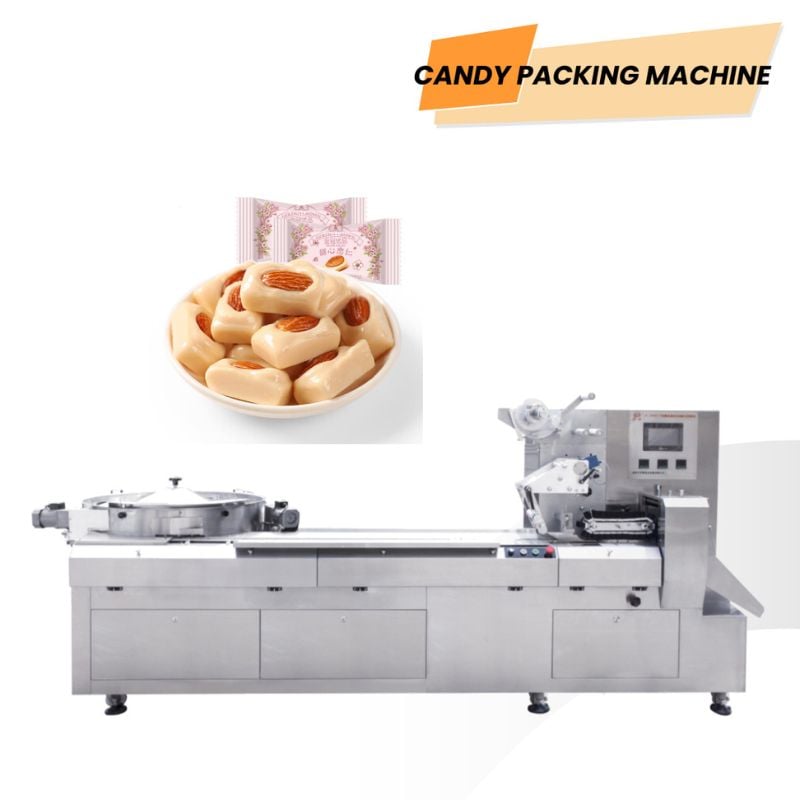
The JY-ZB500T's dual-purpose design eliminates the need for two separate machines — one for toffee and one for gummy — reducing both the floor space requirement and the total energy consumption for manufacturers who produce both product types. The machine occupies 2500 x 1200 x 1600 mm, a footprint comparable to a single conventional pillow wrapper rather than the combined footprint of two separate machines (which would exceed 5000 x 2400 mm). The 4.5 KW total power consumption is shared between both operating modes, compared to the combined 7 to 9 KW that two separate machines would require. The weight of 800 KG — lighter than the JY-ZB800G (900 KG) dedicated gummy wrapper — reflects the machine's efficient mechanical design that shares the PLC controller, the HMI, the film supply system, and the stainless-steel frame between both operating modes, adding only the dual-zone seal heating elements, the cooling bar, and the twist-end attachment module as mode-specific components. This shared-component architecture reduces the total spare parts inventory that the customer must maintain compared to operating two separate machines, and it simplifies the maintenance training requirements for the factory's technical staff, who need to learn only one machine's service procedures rather than two.