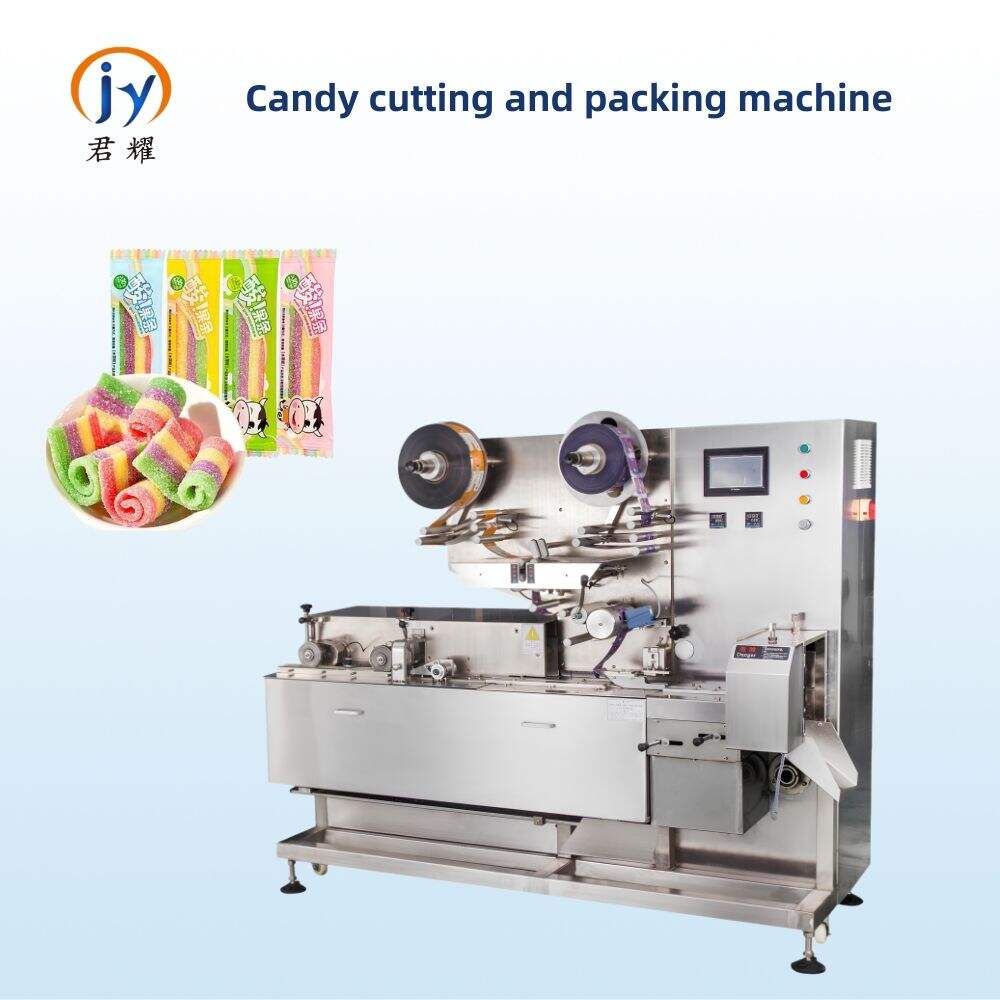

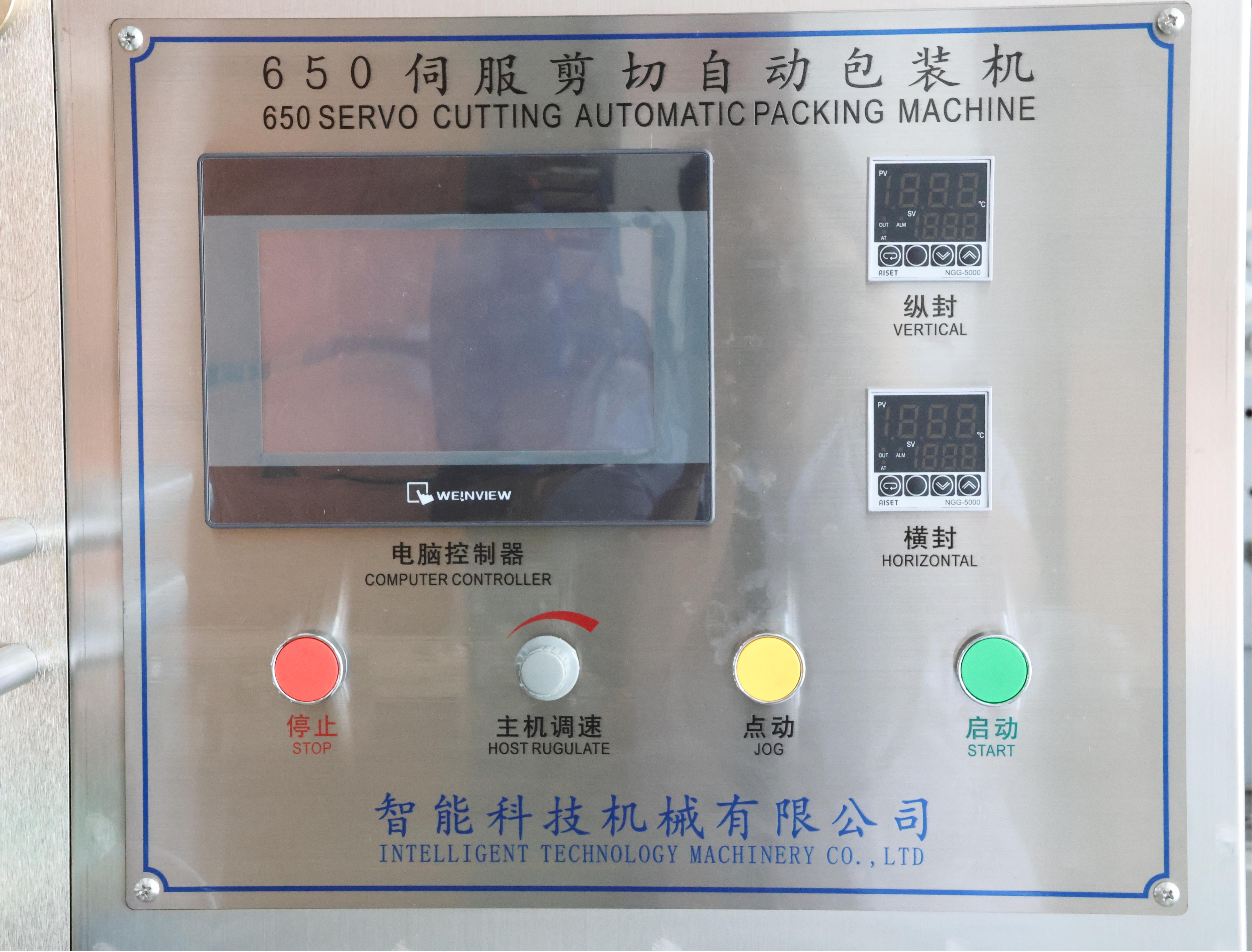

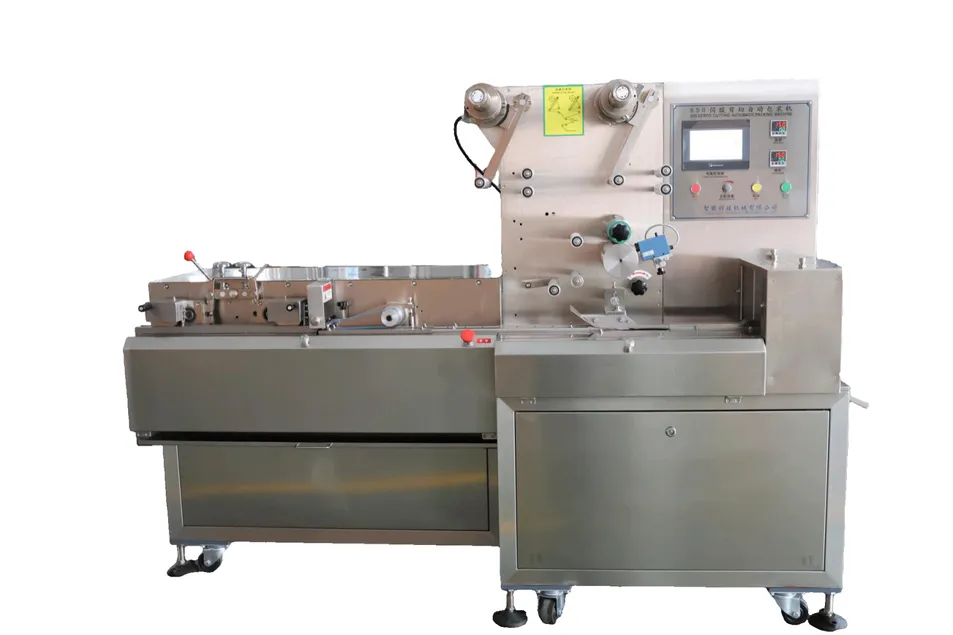
The candy rope leaves the extruder or cooling tunnel and enters a belt conveyor that holds it straight. A rotary cutter, driven by its own servo, slices the rope into pieces at the set length. Each piece is transferred directly into the forming collar, where the film is wrapped around it, sealed along the bottom and closed by the cross seal jaws.
The machine runs from 300 to 650 pieces per minute, with total power of 4.5 kW, a net weight of 850 kg and a footprint of 2000 x 1000 x 1580 mm. For a soft candy or toffee line, that is a compact solution: the frame is short enough to fit at the end of an existing cooling tunnel without rebuilding the hall layout.
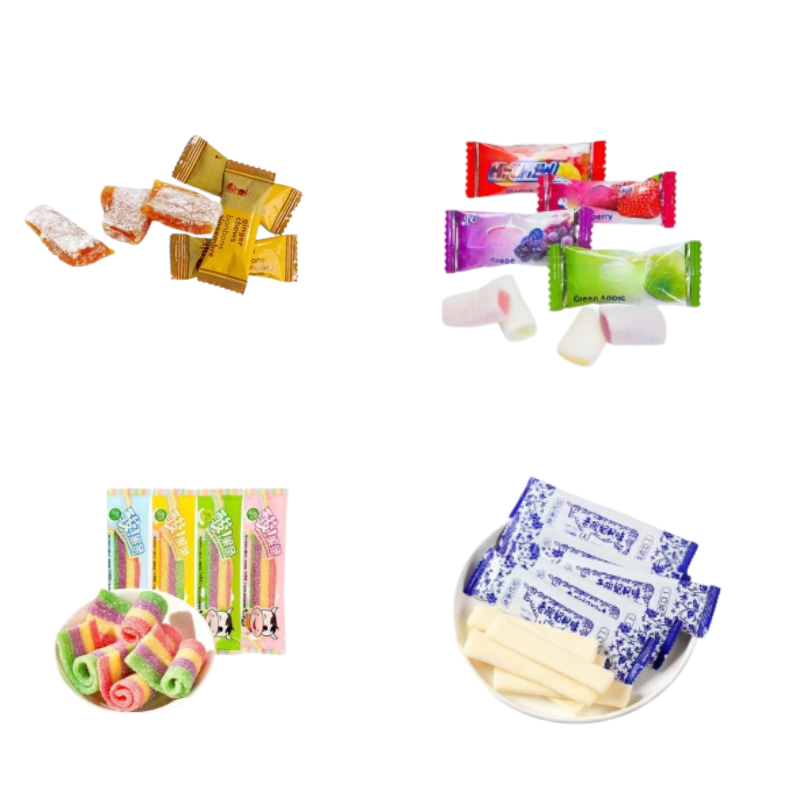
The machine is built for extruded products that arrive as a continuous rope or belt:
It is not suitable for hard candy that shatters under a rotary blade, for products that must cool for several minutes before wrapping, or for ropes whose cross-section collapses after cutting. Fillings that flow at room temperature will also migrate to the seal area; a centre-filled rope usually needs a co-extruded barrier layer.
| Parameter | Value |
| Model | JY-ZB650 |
| Packaging Speed | 300 - 650 pcs/min |
| Power | 4.5 KW |
| Weight | 850 KG |
| Dimensions (L × W × H) | 2000 × 1000 × 1580 mm |
| Control System | Schneider servo + PLC + SICK sensor |
| Servo Motors | 5-axis independent servo |
| Film Type | OPP, CPP, PE, laminated film |
| HMI Interface | 7-inch color touch screen, multi-language |
| Power Supply | 220V / 50-60Hz (customizable) |
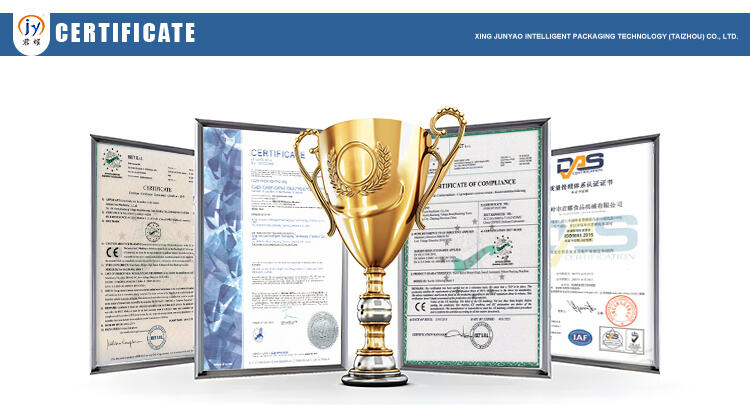
| Certification | CE |
The machine needs a level floor, access to the cutter side for blade changes, and a clean dry air supply for the sealing and cutting cylinders. The electrical supply is 220 V at 50 or 60 Hz as standard, built to order for other voltages.
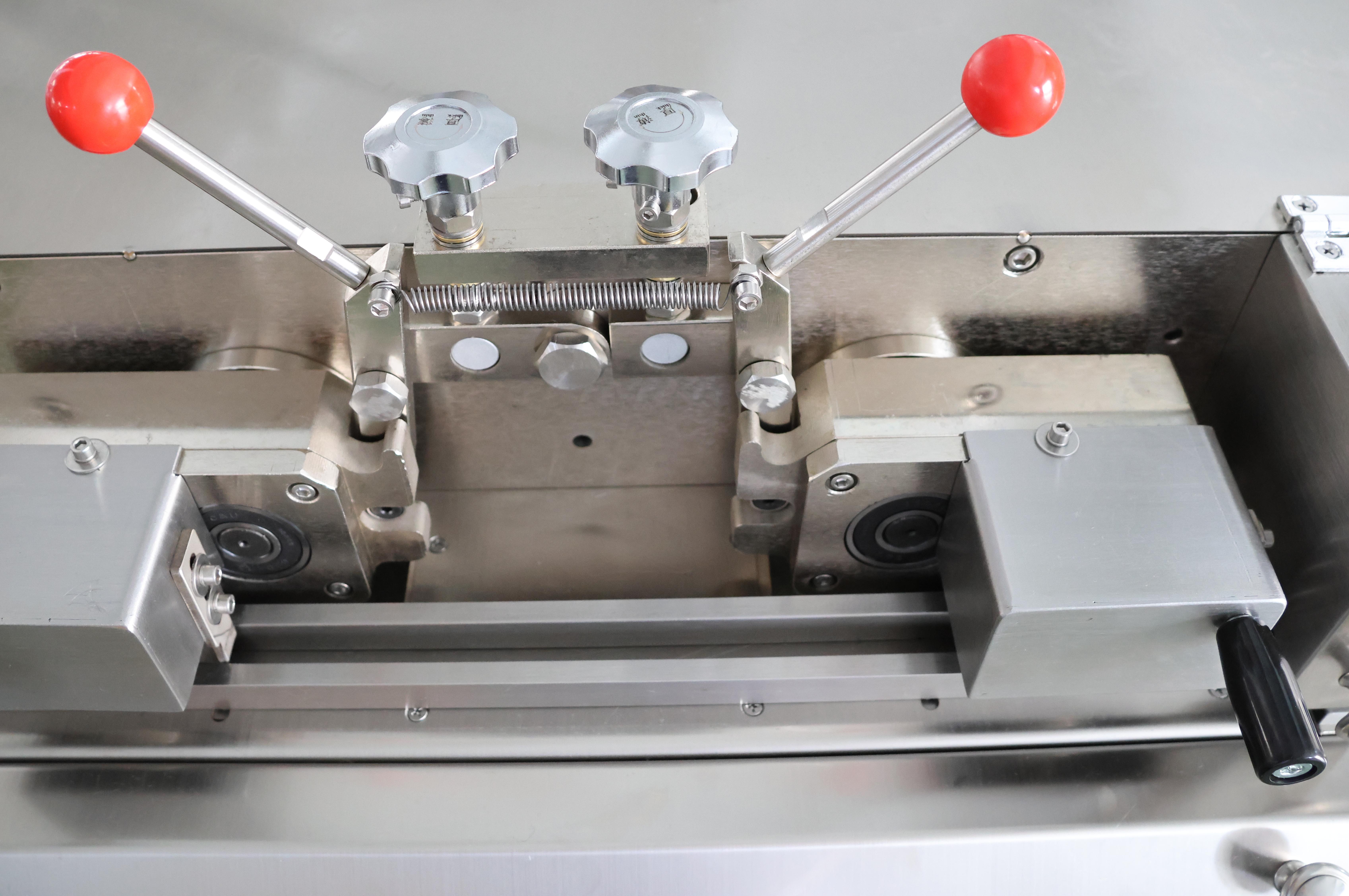
Commissioning covers cutter alignment and blade gap, servo phasing against the film, jaw parallelism and a temperature profile on the customer's film. The first production run sets the cutter length and confirms pack tightness at the target rate. Training covers recipe setting, blade replacement, film threading and fault reading on the HMI.
On a combined cutter-wrapper the blade is the wear item that decides quality, so the maintenance routine is built around it.

Yes, the cut length is set from the touch screen and the cutter follows the film feed. Confirm the shortest and longest piece at order stage.
It usually protects it: the piece never travels on a transfer conveyor, and it is wrapped while still warm and dimensionally stable.
The controller stops the cut and seal cycle, so no empty packs are produced. The operator clears the infeed and restarts in sequence.
Only if the filling is stable at wrapping temperature and does not migrate into the seal. A co-extruded barrier layer is normally required.
It depends on product abrasiveness and running hours. Inspect weekly and replace when the cut face becomes torn rather than clean.
A laminated structure with a sealable inner layer, or PE where a softer pack is acceptable. Stiff OPP alone tends to crease at the rounded edges.
No. A rotary blade will shatter hard candy; that product is normally wrapped on a different platform.
Copyright © Xing Junyao Intelligent Packaging Technology(Taizhou)Co.,Ltd - Privacy policy
 EN