
 EN
EN
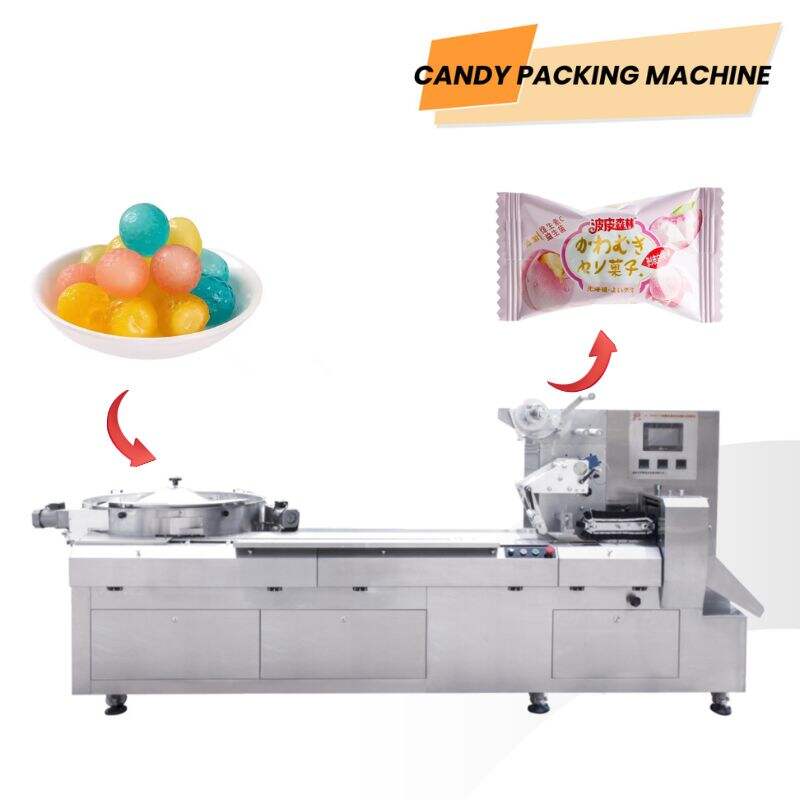
How Candy Packaging Machines Slash Labor Costs and Boost Output
Cutting Labor Expenses by 40–60% Through Semi-Automated Packaging
Wrapping, sealing, and labeling candies by hand takes a lot of work from people all day long. These tasks are prone to mistakes when workers get tired or bored. Semi-automated packaging machines tackle these problems head on by handling the repetitive parts accurately. According to data from PMMI, companies typically see around 40 to 60 percent less reliance on staff after implementing such systems. Think about it this way: while five folks might struggle to wrap 100 pieces every minute manually, one person can manage the same amount using a semi-auto machine. The savings go beyond just wages though. Training new hires becomes cheaper and less time-consuming, plus there’s fewer headaches when someone calls out sick, something that matters a lot where finding good workers is tough. Plus, most modern machines come with easy-to-use controls so even someone without much tech background can jump right in and start producing without weeks of classroom training.
From Manual to Machine: Scaling Throughput from 20 to 120 Units/Minute
Manual packaging has serious limits, usually maxing out around 20 units per minute per person. Workers get tired, their pace varies, and they have to do each step one after another. Candy packaging machines completely break through this barrier, hitting speeds over 120 units per minute thanks to smooth motion designs and automatic feeders. The big jump in speed comes from having all three steps—weight, fill, seal—happen together without stopping or waiting for transfers between tasks. Seasonal candy makers really benefit from this kind of capacity boost when demand spikes during holidays or special promotions. These machines also come equipped with smart sensors that cut down on mistakes and waste by about 30%. They spot problems right away, like crooked seals, pouches that aren’t full enough, or damaged wrappers. This means every package looks good on store shelves, and manufacturers get better value from their materials.
Choosing the Right Candy Packaging Machine for Growth and Flexibility
Flow Wrap vs. VFFS vs. Pouch Fill-Seal: Matching Technology to Your Product Line
When picking out the best candy packaging machine, budget matters less than what kind of candy we’re talking about, how delicate it is, and where the brand stands in the market. Flow wrap machines work great for things like chocolate bars that are all one piece and consistent in shape. They pack stuff fast too, around 60 to 120 packages every minute while taking up minimal space on the floor. For those little candies that pour around like gummy bears or jelly beans, VFFS systems are the way to go. These Vertical Form Fill Seal machines can handle all sorts of loose materials and fill bags directly from rolls of plastic film at speeds between 40 and 100 packs per minute. Pouch fillers are different though. They create those fancy stand-up pouches that look so good on store shelves but come with trade-offs. Speed drops down to about 30 to 70 packs per minute, and setting them up takes more time and effort compared to other options. What really counts when choosing equipment isn’t just how many packages it can churn out per minute. Factors like how runny the ingredients are, whether they get crushed easily during packing, and if batches vary much from day to day will determine which machine makes sense for any particular operation.
| Machine Type | Best For | Speed Range | Flexibility |
|---|---|---|---|
| Flow Wrap | Solid bars/hard candies | 60–120 packs/min | Moderate |
| VFFS | Granular/free-flowing items | 40–100 packs/min | High |
| Pouch Fill-Seal | Premium/mixed-weight goods | 30–70 packs/min | Highest |
Key Selection Factors: Compact Footprint, Modular Upgradability, and Quick Changeovers
Growth-aligned machines prioritize adaptability over static capacity. Prioritize models engineered for evolving needs:
- Compact footprint, ideally under 10 sq. meters, to fit retrofitting into existing small-batch facilities
- Tool-less changeovers, enabling full product format switches—including film type, pouch size, or seal pattern—in under 15 minutes
- Hygienic design, with FDA-compliant stainless steel contact surfaces and integrated CIP (Clean-in-Place) capability
- Modular upgradability, supporting future integration of vision inspection, weight verification, or IoT-based performance analytics
Small confectioners consistently report 3–5 month ROI when aligning these features with realistic production growth curves—turning automation from a capital expense into an operational accelerator.
Building Brand Trust with Consistent, High-Quality Packaging
Precision Sealing and Visual Uniformity: Reducing Returns and Strengthening Shelf Appeal
When it comes to sealing products, automation does far more than just keep things intact. It actually builds consumer confidence right there on the package itself. The kind of tight, reliable seals that machines produce stop water from getting inside and prevent oxidation too. According to research published by NSF International last year, this cuts down spoilage rates by about a quarter when compared to what humans can achieve manually. At the same time, these automated systems handle registration so well they get those printed designs aligned perfectly, folds looking exactly the same each time, and finishes that match across all units coming off the line. Studies in the Journal of Consumer Marketing back this up, showing such consistency makes products stand out on shelves roughly 40% better than inconsistent ones. When customers see those uniform packages, they start thinking the company cares about details, knows what it's doing, and maintains strict quality standards. This reduces buyer hesitation at stores and means fewer returns because of damaged or improperly sealed items.
Overcoming Adoption Barriers: ROI Clarity, Financing, and Vendor Support
For small confectionery businesses, upfront cost remains the primary adoption barrier—but it’s rarely about affordability alone. It’s about confidence in execution. Success hinges on three interdependent pillars:
- Transparent ROI modeling: Quantify labor savings (40–60%), reduced material waste (up to 30%), and throughput gains against total cost of ownership—not just purchase price. Factor in defect reduction, faster time-to-market, and staff redeployment value.
- Flexible financing: Leasing, vendor-backed step-up payment plans, or equipment-as-a-service models convert large CapEx into predictable OpEx—aligning payments with revenue uplift.
- Vendor partnership depth: Prioritize suppliers offering turnkey commissioning, preventive maintenance contracts, remote diagnostics, and responsive technical support—not just hardware.
Together, these elements transform automation from a perceived risk into a validated, scalable growth lever—one that pays for itself while elevating operational maturity and brand credibility.
FAQ
What types of candy packaging machines are best for different candy types?
Flow wrap machines are optimal for solid bars and hard candies, VFFS machines suit granular or free-flowing items like gummy bears, while pouch fill-seal machines are ideal for premium or mixed-weight goods.
How much can labor costs be reduced with candy packaging machines?
Labor costs can be reduced by 40-60% with semi-automated candy packaging machines.
What are the key factors to consider when selecting a candy packaging machine?
Key factors include compact footprint, tool-less changeovers, hygienic design, and modular upgradability to support future enhancements.