
 EN
EN
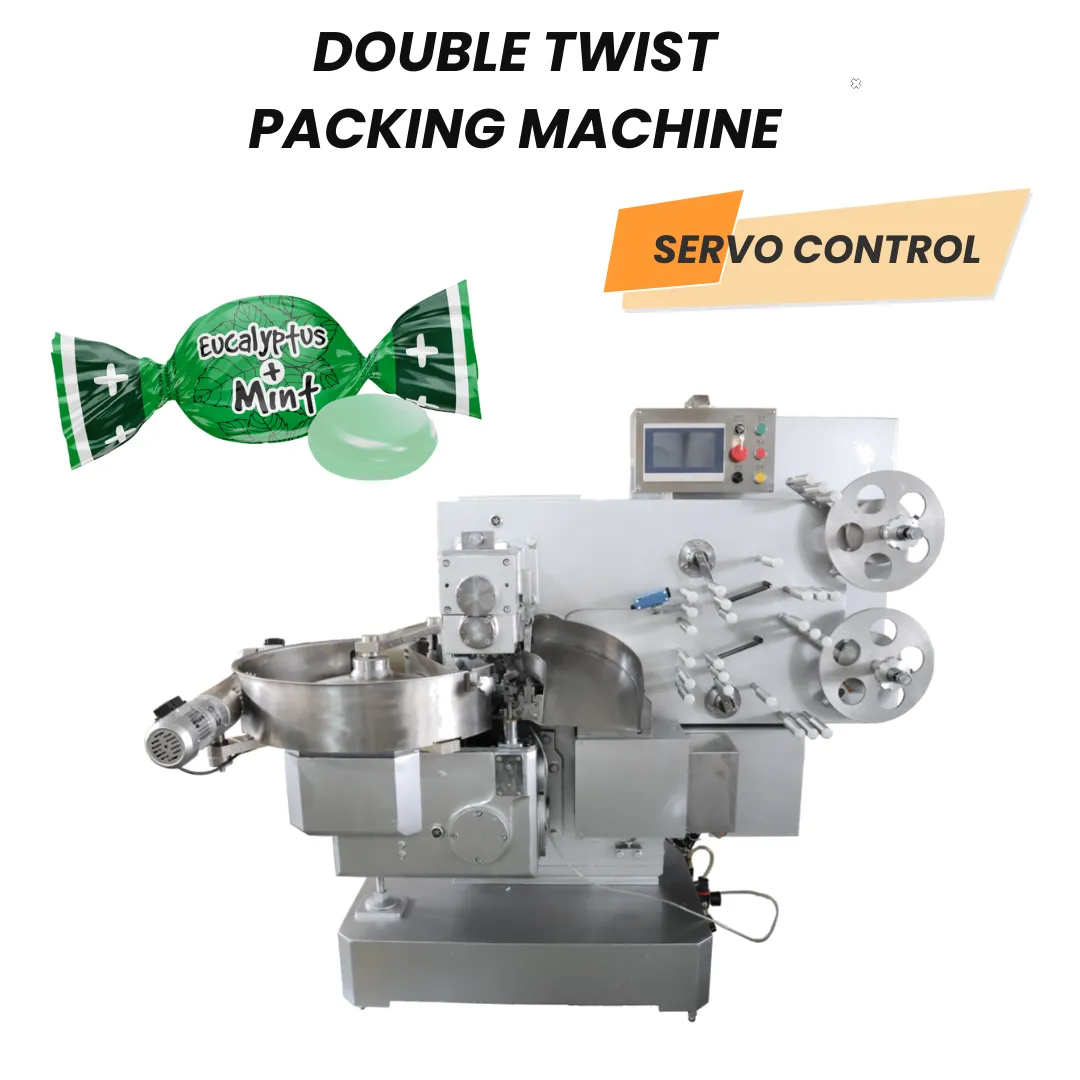
Candy Packaging Machine Integration: Eliminating the Primary Bottleneck
How wrapping station inefficiencies cascade across automated confectionery lines
When wrapping stations aren't working properly, they quickly turn into major problems for candy production lines. Small issues such as when wrappers don't line up right or seals aren't consistent can cause huge delays downstream. The whole system basically grinds to a halt because nothing further along the line can proceed until everything catches up again. Think about it this way: top end packaging machines typically run between 800 to 1200 candies per minute, but if there's just one problem at the wrapping station, those same lines might slow down to something closer to what someone could do manually, around 60 to 90 pieces per minute. And let's not forget the financial hit either. According to research from Ponemon Institute back in 2023, unexpected stoppages at these stations cost companies well over seven hundred forty thousand dollars each year through things like wasted product, having to shift workers around, and missing out on deliveries.
Real-time synchronization between upstream feeders and downstream conveyors
Modern systems combat bottlenecks via integrated sensor networks enabling millisecond-level coordination between components:
- Upstream feeders dynamically adjust candy flow using weight and vision sensors
- Downstream conveyors modulate speed based on real-time wrapper accumulation signals
This closed-loop control prevents overflow or starvation at wrapping stations—conditions that historically caused 73% of line halts (Packaging Digest, 2023). Harmonized timing ensures uninterrupted material transfer between depositing, wrapping, and cartoning phases, sustaining 99% overall equipment effectiveness during peak loads.
Performance Advantages of Modern Candy Packaging Machines
Speed and scalability: 800–1,200 units/min vs. manual (60–90 units/min)
Candy packaging machines today can really crank out the product at impressive speeds – around 800 to 1,200 units every minute. That's way faster than what humans can manage manually, which is only about 60 to 90 units per minute. Such a big jump in productivity means factories can handle those busy holiday seasons without running into staffing issues. These automated setups work right alongside the mixing equipment and then connect to the case packing area, keeping everything moving smoothly throughout the process. Take a major chocolate manufacturer as an example. They managed to boost their Christmas season production by four times thanks to these flexible machines. The best part? Their equipment can switch between different candy bar sizes in just under five minutes, so they don't waste time waiting for tool changes when demand shifts.
Precision and consistency: <0.5% miswraps vs. 4–7% in semi-auto setups
Speed isn't the only advantage of automated wrapping systems. These machines actually produce almost perfect results with miswrap rates sitting under 0.5%, whereas semi-automated lines typically struggle with around 4 to 7% errors. What makes this possible? Well, modern systems come equipped with built-in sensors and those fancy servo motors that keep the wrapper tight and properly aligned, even when dealing with odd shaped candies or chocolates. According to some industry reports from last year (the Food Processing Journal had something on this), companies adopting full automation see about an 18% drop in wasted products. And let's face it, nobody wants to deal with customers complaining about ripped packaging or seeing the actual candy through holes in the wrapper. When everything comes out looking good and intact, brands maintain their reputation no matter where these treats end up selling worldwide.
Sealing Technology Selection: Matching Method to Product and Line Requirements
Precision sealing determines both product integrity and line throughput in candy manufacturing. Mismatched technology risks costly waste through compromised barriers or thermal damage—making selection as critical as the candy packaging machine itself.
Cold seal for chocolate bars: Preventing thermal distortion while ensuring integrity
Chocolate’s temperature sensitivity requires adhesive-based sealing without heat application. This method:
- Maintains bar structural integrity by avoiding cocoa butter bloom (which occurs above 32°C/90°F)
- Uses pressure-activated adhesives that bond wrapper layers within 0.8 seconds
- Achieves ¬0.3% seal failure rates while preserving intricate mold designs
The absence of thermal energy prevents surface distortion, ensuring premium appearance—without compromising production speeds exceeding 1,000 bars/minute.
Heat seal for chewy/caramel formats: Achieving hermetic closure at speed
Viscous fillings demand complete barrier protection against moisture exchange and oxidation. Thermo-sealing:
- Creates molecular-level polymer fusion at 140–180°C
- Delivers airtight seals within 0.5-second dwell times
- Withstands filling viscosity up to 80,000 cP without seam leakage
High-shear formulations benefit from instantaneous hermetic closure, preventing stickiness-related conveyor jams while supporting throughput above 1,200 units/minute.
Processing environments dictate sealing parameters: chocolate lines operate in RH-controlled zones below 18°C/65°F, while caramel handling tolerates up to 24°C/75°F. Temperature-dependent technology matching directly impacts waste reduction—misalignment causes up to 9% rework costs in hybrid operations (Confectionery Production Analysis, 2023).
Why Wrapping—Not Just Packaging—Defines Line Viability and ROI
Wrapping plays a much bigger role in candy manufacturing than just putting wrappers on products. It's actually what keeps the whole operation running smoothly and makes or breaks profitability. Packaging includes things like containing the product and adding labels, but proper wrapping goes beyond that. Good wrapping maintains product quality so candies don't get damaged, keeps them stable on store shelves, and presents them attractively to customers who walk past hundreds of other sweets every day. When wrapping machines start acting up, everything else grinds to a halt. The molding machines stop feeding product forward, conveyor belts sit idle, and workers scramble to fix problems throughout the facility. Look at the numbers: older semi-automated systems typically have around 5% error rates, leading to tons of wasted product and expensive rework. Modern high-speed wrappers can handle 800 to 1,200 pieces per minute while keeping mistakes below half a percent. That kind of performance boost translates to about 15-20% higher output overall. For manufacturers, each additional percentage point of machine uptime saves well over $100,000 annually because production stays steady without interruptions. Investing in better wrapping technology pays off repeatedly. It stops money bleeding out from damaged products, cuts down on staff needed for quality checks, and gets more use out of existing equipment. Smart companies know this isn't just another packaging upgrade it’s essential for making automated candy production work profitably in today's competitive market.
FAQ
What is the biggest bottleneck in candy production lines?
The wrapping station is often the primary bottleneck in candy production lines due to issues with wrapper alignment and seal consistency, which can cause significant delays downstream.
How do modern candy packaging machines improve productivity?
Modern candy packaging machines can operate at speeds of 800 to 1,200 units per minute, significantly faster than manual operations, allowing factories to handle busy periods efficiently.
What is the advantage of using cold seal technology for chocolate bars?
Cold seal technology prevents thermal distortion, such as cocoa butter bloom, ensuring chocolate bars maintain their structure and appearance without compromising production speeds.
Why is proper wrapping crucial for candy products?
Proper wrapping maintains product quality, keeps candies stable on store shelves, and presents them attractively to customers, which is vital for profitability and brand reputation.