 EN
EN
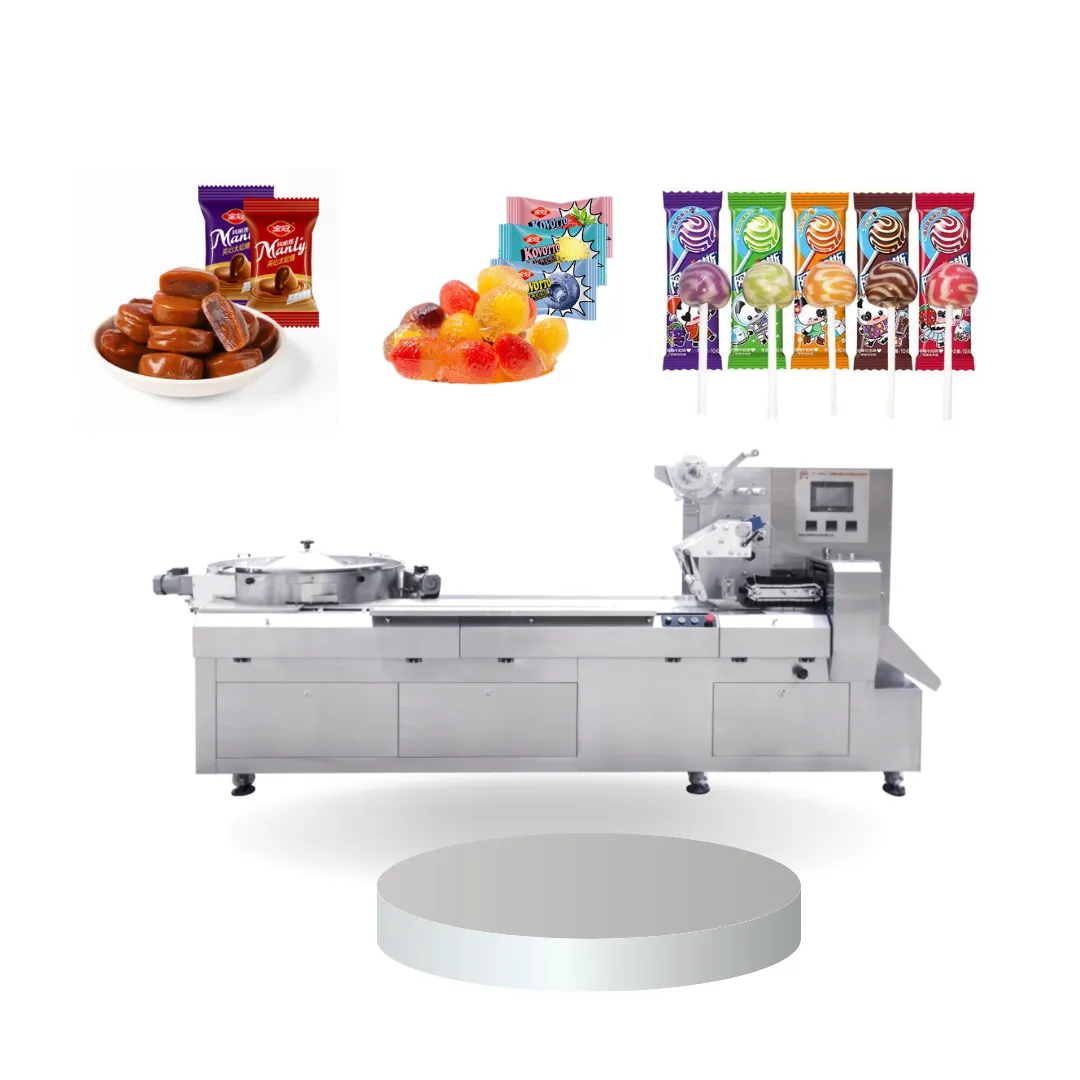
Accelerating Output: How Candy Packaging Machines Maximize Production Speed
High-Speed Fill-and-Seal Cycles with Minimal Downtime
Today's candy packaging machines can really crank out the product thanks to their carefully designed fill and seal processes. Take horizontal flow wrappers as an example they manage to package consistently shaped hard candies at speeds exceeding 400 bags each minute. These machines combine weighing, feeding, and sealing all in one smooth operation, which gets rid of those pesky manual handling delays while keeping weight differences within just half a gram. The newer models come equipped with tools that snap on and off quickly plus built-in diagnostic features. This has cut down the time needed to switch between different products by about three quarters and keeps unexpected machine stops below 2% of total running time. With this kind of dependability, factories can run around the clock without sacrificing quality something regular workers simply cannot match when doing things by hand.
Throughput Comparison: Manual Labor vs. Automated Candy Packaging Machine Lines
Automation dramatically outperforms manual packaging across all efficiency metrics:
| Method | Output Rate | Error Rate | Scalability |
|---|---|---|---|
| Manual | 30 bags/min* | 3–8% | Limited by staffing |
| Automated | 40–200+ units/min | <0.5% | Expandable via integration |
*Per operator, accounting for fatigue and variability
As packaging engineering benchmarks confirm, automated lines sustain 5–8‰ higher throughput while reducing staffing requirements by up to 60%. This scalability allows manufacturers to meet fluctuating demand–especially during seasonal peaks–without sacrificing precision or compliance.
Ensuring Precision: Accuracy and Consistency with Modern Candy Packaging Machines
Tolerance-Controlled Weighing, Counting, and Sealing Mechanisms
Modern candy packaging equipment keeps things accurate thanks to tight control over tolerances throughout the process. Weighing systems automate portion control, cutting down on those pesky issues where packages end up either shortchanged or overfilled. Studies show these automated systems reduce errors by around 95% compared to what happens when humans do the job manually. Meanwhile, fast counting sensors handle tiny treats like gummy bears and hard candies without missing a beat. When it comes to sealing, the machinery applies just the right amount of heat and pressure each time, creating seals that stay closed until someone actually opens them. Most factories run real time monitoring through their PLC systems so any problems get fixed before they become bigger issues. This attention to detail means less product waste, fewer rejected batches, and better protection for the brand name on store shelves. Nobody wants to deal with product recalls or customers complaining about expired goods after all.
AI-Powered Vision Inspection for Real-Time Defect Detection and Compliance
Vision inspection systems powered by AI serve as quality checkpoints throughout packaging lines. Cameras built into these systems can check products while they move at full speed, spotting issues like crooked wrappers, broken seals, missing parts, or even foreign objects all within fractions of a second. The machine learning models behind them look at tons of images every hour and kick out anything that doesn't meet standards before it gets further along the production chain. Real time checks cut down on mistakes made by human inspectors by around 95 percent according to industry data. This helps companies follow food safety rules set by regulators like the FDA's Preventive Controls guidelines, which matters a lot for keeping customers confident when they see consistently packaged goods. Traditional methods only catch problems during random checks, but AI inspection covers everything without gaps, making quality control part of the actual production process rather than just a separate step at the end.
Smart Integration: Synchronized Automation That Balances Speed and Accuracy
PLC-Guided Motion Control and HMI-Driven Recipe Switching for Line Flexibility
Real peak performance doesn't come from just having all the right parts lying around somewhere. It happens when everything works together like clockwork through tight automation systems. These PLC controlled motion systems keep robotic arms, conveyor belts, filling machines, and sealing equipment perfectly in sync so there are no delays or bottlenecks in production. Operators love the HMI dashboards too because they can switch between different product types really fast - think lollipops one minute, gummy bears the next, then chocolate candies or small snack packs without needing to tear apart any machinery or reset anything manually. What makes all this possible? A combination of smart programming, reliable hardware integration, and user friendly interface design that lets staff focus on running operations rather than troubleshooting equipment issues.
- Adaptive sealing parameters adjusted in real time based on ambient and material temperature
- Hundreds of pre-validated configurations stored and recalled in seconds
- Sensor-triggered automatic changeovers completed in 3 seconds
This closed-loop integration reduces system-level downtime by up to 40% compared to standalone equipment, sustains tight tolerance windows even at top speeds, and maintains OEE rates above 90%–a benchmark rarely achieved in non-integrated environments.
Proven Business Impact: ROI Metrics from Candy Packaging Machine Deployment
Candy packaging machines that are automated tend to pay for themselves pretty quickly, usually within somewhere between twelve and twenty four months according to what many factories report. When these machines take over the repetitive packing tasks, labor expenses drop anywhere from thirty to fifty percent. Staff members get freed up to handle things like supervision, maintenance work, or other roles that actually add value to operations. The machines fill packages with pinpoint accuracy which means less wasted materials overall, cutting down on waste by around fifteen to twenty five percent thanks to those precise measurements. Throughput increases dramatically too, sometimes going up two hundred to three hundred percent, allowing companies to fulfill orders much faster without needing extra hours worked or expanding factory space. And when we throw in the almost perfect quality control provided by AI vision systems, all these factors together can boost what's called Overall Equipment Effectiveness (or OEE for short) by forty to sixty percent across the board.
The cumulative impact transforms packaging from a cost center into a strategic profit lever:
- Labor optimization: Reduced dependency on shift-based labor, especially during peak seasons
- Material efficiency: Elimination of giveaway and packaging errors directly improves COGS
- Demand responsiveness: Seamless product changeovers support agile SKU management
- Brand equity preservation: Consistent quality reduces returns, complaints, and reputational risk
Facilities report 20–35% gross margin improvements post-implementation–making automation not just operationally essential, but commercially decisive in today's competitive confectionery landscape.
FAQ
What is the advantage of using automated candy packaging machines?
Automated candy packaging machines offer numerous advantages such as increased output rates, minimized error rates, scalability, and reduced staffing requirements, ultimately leading to enhanced operational efficiency and cost savings.
How do modern candy packaging machines ensure accuracy and consistency?
These machines use tolerance-controlled weighing, counting, and sealing mechanisms to automate portion control and apply optimal heat and pressure for consistent seals, reducing errors and product waste significantly.
Why is AI-powered vision inspection important in packaging?
AI-powered vision inspection systems ensure real-time defect detection and compliance by identifying issues like crooked wrappers, broken seals, and foreign objects promptly, which traditional methods might miss, thus maintaining high quality standards consistently.
What is the role of smart integration in candy packaging automation?
Smart integration via PLC-guided motion control and HMI-driven recipe switching allows synchronized operation of all machinery, ensuring no delays or bottlenecks, and facilitates quick transitions between different product types.
Table of Contents
- Accelerating Output: How Candy Packaging Machines Maximize Production Speed
- Ensuring Precision: Accuracy and Consistency with Modern Candy Packaging Machines
- Smart Integration: Synchronized Automation That Balances Speed and Accuracy
- Proven Business Impact: ROI Metrics from Candy Packaging Machine Deployment
- FAQ