 EN
EN
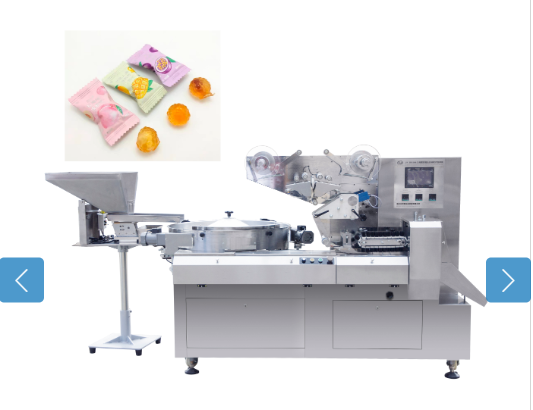
In the competitive biscuit manufacturing industry, packaging is far more than a protective layer — it is a direct expression of brand identity, shelf appeal, and consumer trust. A pillow packing machine sits at the heart of this challenge, offering manufacturers the mechanical foundation needed to deliver consistent, attractive, and highly customizable biscuit packaging across diverse product lines. Understanding how this technology enables flexibility is essential for any producer aiming to compete in both retail and industrial markets.
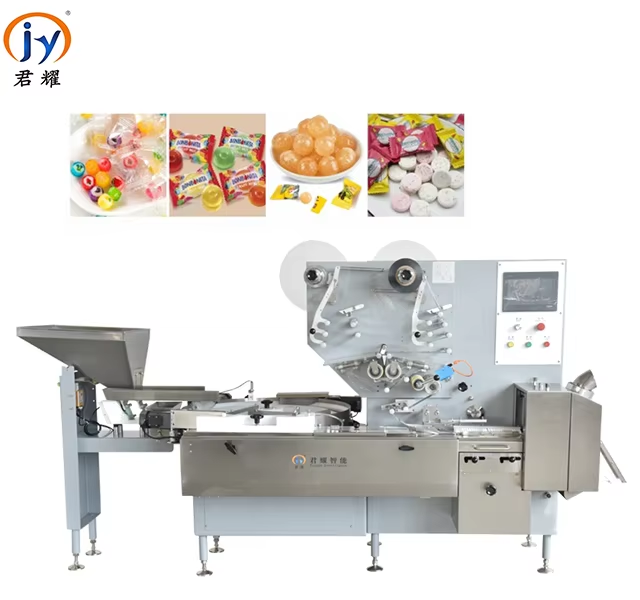
A pillow packing machine operates on a horizontal flow-wrap principle, drawing a continuous film roll, forming it around the product, and sealing it at both ends to create the signature pillow-shaped package. This design is not merely aesthetic — it is engineered to accommodate a wide range of biscuit shapes, sizes, and stack configurations. When a production team needs to shift from individually wrapped crackers to multi-pack biscuit sleeves, the pillow packing machine makes that transition efficient, repeatable, and economical.
Core Customization Capabilities of a Pillow Packing Machine
Flexible Sizing and Format Adjustment
One of the most commercially valuable features of a pillow packing machine is its ability to handle variable product dimensions without requiring a full mechanical overhaul. Operators can adjust the film feed length, cutting position, and sealing gap to accommodate biscuits ranging from small individual rounds to large rectangular wafer stacks. This pillow packing machine flexibility allows a single production line to serve multiple SKUs, reducing capital investment significantly. For biscuit brands that regularly introduce seasonal or promotional formats, this adaptability is a direct competitive advantage.
Many pillow packing machine models support tool-free or semi-automatic changeover, meaning format switches can be completed in minutes rather than hours. This minimizes downtime between production runs and supports high-mix, lower-volume production strategies that are increasingly common in today's biscuit market. A well-configured pillow packing machine allows packaging managers to respond quickly to retailer requests for custom portion sizes or display-ready formats.
Film Compatibility and Print Registration
The pillow packing machine is designed to work with a broad spectrum of packaging films, including oriented polypropylene, metallized films, and laminated barrier materials. Each film type delivers different properties — from high-clarity presentation to extended moisture protection — and the pillow packing machine accommodates these variations through adjustable tension control and temperature-regulated sealing heads. This means biscuit manufacturers are not locked into a single packaging material, giving them the freedom to match film choice with product shelf-life requirements and branding goals.
Print registration is another critical customization factor. A pillow packing machine equipped with an eye-mark sensor system ensures that printed graphics align precisely on every package. For premium biscuit brands where logo placement and visual consistency define shelf presence, accurate print registration is non-negotiable. The pillow packing machine tracks the film's registration marks in real time and micro-adjusts the cutting cycle to maintain perfect graphic alignment at high production speeds.
How a Pillow Packing Machine Supports Variable Output Requirements
Speed Control and Production Scalability
A pillow packing machine offers adjustable output speeds, typically ranging from lower settings suitable for fragile biscuits to higher speeds for robust, uniform products. This speed variability ensures the pillow packing machine can be matched to the upstream biscuit line output without creating bottlenecks or product damage. Manufacturers scaling up production do not necessarily need a new machine — they need a pillow packing machine with the right speed range and servo-driven control system to grow with demand.
Modern pillow packing machine designs incorporate programmable logic controllers that store multiple product recipes. When switching between biscuit types, operators simply call up the saved recipe on the touchscreen, and the pillow packing machine automatically adjusts speed, sealing temperature, film length, and other parameters. This intelligence reduces operator error and ensures packaging quality remains consistent regardless of which product is running.
Integration with Feeding and Counting Systems
A pillow packing machine does not operate in isolation. In a complete biscuit packaging line, the pillow packing machine receives products from an upstream infeed conveyor, a stacking unit, or an automated counting system. The ability of the pillow packing machine to synchronize with these upstream devices is what makes multi-pack and counted-portion biscuit packaging possible. For example, a four-biscuit stack format requires the pillow packing machine to time each seal cycle precisely with the arrival of a correctly formed group of biscuits.
When a pillow packing machine is integrated with vision inspection or checkweigher systems, the line gains the ability to reject non-conforming packages automatically. This quality assurance layer means every biscuit package leaving the pillow packing machine meets the weight and count specification before entering secondary packaging or shipping. Such integration transforms the pillow packing machine from a simple wrapping device into a smart production node within a fully automated biscuit facility.
Packaging Design Freedom Enabled by a Pillow Packing Machine
Custom Seal Patterns and Package Geometry
Beyond standard pillow-shape output, a pillow packing machine with advanced jaw configurations can produce gusset seals, reinforced fin seals, or easy-tear perforations. These options allow biscuit brands to differentiate their packaging experience at the consumer level. An easy-open pillow packing machine package, for instance, enhances convenience and can be a deciding factor for retail buyers evaluating competing biscuit brands. The pillow packing machine thus becomes a tool not just for production efficiency but for product positioning.
Package geometry — particularly the overall length-to-width ratio — can also be controlled through the pillow packing machine's film path settings. A tighter wrap conveys freshness and premium quality, while a looser wrap may be preferred for multi-piece configurations where biscuits need some movement protection. Experienced packaging engineers use the pillow packing machine's adjustable parameters to dial in the exact presentation that supports the brand's market positioning.
Labeling and Coding Compatibility
A pillow packing machine is routinely paired with inline coding systems that apply batch numbers, expiry dates, and barcodes directly onto the sealed package. This compatibility makes the pillow packing machine a compliant solution for food safety traceability requirements in regulated markets. Whether the application calls for inkjet coding, thermal transfer printing, or laser marking, the pillow packing machine can integrate these systems without disrupting line flow. For biscuit producers supplying large retail chains, this traceability capability is often a mandatory requirement rather than an optional feature.
FAQ
What biscuit types can a pillow packing machine handle?
A pillow packing machine can handle a wide variety of biscuit types including flat cookies, sandwich biscuits, crackers, wafers, and multi-layer stacks. The key variables are product height, fragility, and whether the biscuits are fed individually or in groups. Most pillow packing machine models offer adjustable infeed guides and sealing parameters to accommodate these differences without damaging the product.
How does a pillow packing machine maintain packaging consistency at high speeds?
At high production speeds, a pillow packing machine maintains consistency through servo-driven film feed motors, real-time eye-mark detection, and precise temperature control on the sealing jaws. These systems work together to ensure each package produced by the pillow packing machine has correct seal integrity, accurate film length, and proper graphic registration, even when running hundreds of packages per minute.
Can a pillow packing machine be upgraded for future packaging requirements?
Yes, many pillow packing machine platforms are designed with modularity in mind. Manufacturers can add upstream feeding systems, downstream conveyors, vision inspection units, or coding equipment to an existing pillow packing machine as production needs evolve. This modular approach means the pillow packing machine investment retains value over time and can adapt to new biscuit formats, market regulations, or retailer packaging specifications without requiring a full line replacement.