 EN
EN
Automated Efficiency: How Pillow Packing Machines Cut Labor and Downtime Costs
Form-Fill-Seal Automation Reduces Manual Labor by 60–75%
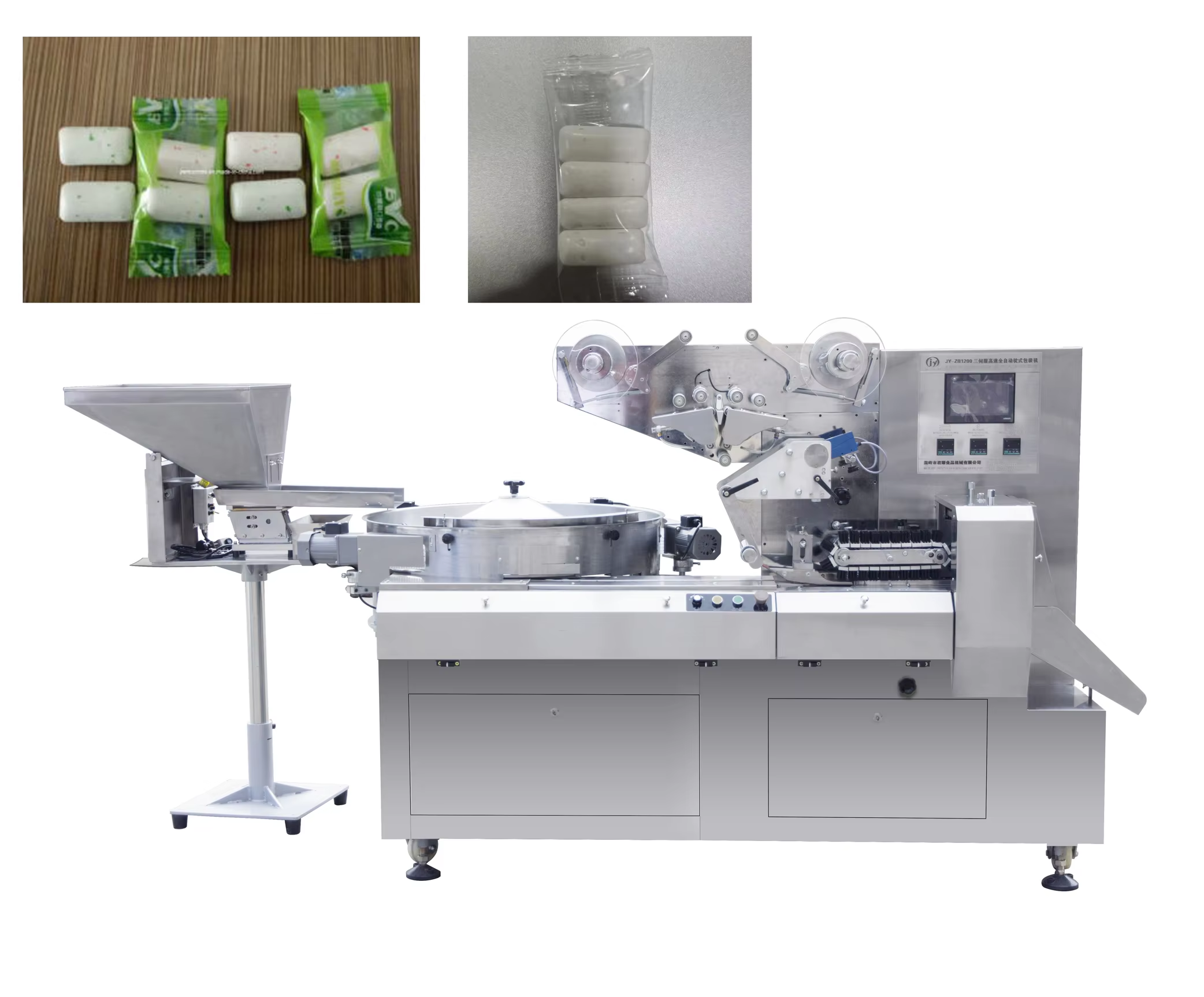
Modern pillow packing machines use form-fill-seal (FFS) technology to automate bag forming, product filling, and heat sealing—replacing manual labor across the entire packaging sequence. This shift reduces direct labor requirements by 60–75% compared to conventional methods. Operators move from repetitive, physically demanding tasks into higher-value roles such as quality assurance, machine supervision, and process optimization. FFS systems also improve consistency in fill weight and seal integrity, cutting material waste and minimizing rejects caused by human error.
| Efficiency Metric | Traditional Packaging | Automated Pillow Packing | Improvement |
|---|---|---|---|
| Labor Costs | High | Low | 60–75% reduction |
| Production Speed | 20–40 pouches/min | 60–120 pouches/min | 150–200% increase |
| Material Waste | 10–15% | 3–5% | 50–70% reduction |
| Seal Integrity | 85–90% | 99% | 10–15% improvement |
These gains directly lower operating costs—most manufacturers recover their investment in automated pillow packing equipment within 12–18 months.
Predictive Maintenance Extends Uptime and Lowers Unplanned Repair Costs
Today’s advanced pillow packing machines integrate predictive maintenance capabilities that monitor servo motors, cutting blades, and heat sealers in real time. By analyzing vibration patterns, thermal drift, and performance deviations, these systems detect early signs of wear or failure—often days before a breakdown occurs. As a result, unplanned downtime drops by up to 80%, allowing maintenance teams to schedule interventions during planned stops rather than reacting to emergencies.
Key outcomes include:
- 30–50% fewer maintenance labor hours
- 40–60% lower emergency part replacement costs
- Equipment uptime exceeding 95% through condition-based monitoring
Industry data shows predictive maintenance reduces total annual repair costs by 25–35%, extends machine service life, and sustains line productivity without compromising output quality.
Energy-Saving Innovations in Modern Pillow Packing Machines
Servo-Driven Systems Deliver 25–40% Lower Power Consumption vs. Pneumatic Alternatives
Servo-driven motion control has become the standard for energy-efficient pillow packing. Unlike pneumatic systems—which require constant compressed air generation and suffer from pressure leakage and inefficiency—servo motors deliver precise, on-demand power only when actuation is needed. This targeted operation cuts electricity consumption by 25–40% during typical production cycles. For facilities running multiple lines 24/7, the cumulative utility savings are substantial—and achieved without sacrificing speed, accuracy, or reliability. Reduced mechanical stress from smoother motion profiles also contributes to longer component life and fewer unscheduled service events.
Adaptive Thermal Control Optimizes Heat-Seal Energy Use Without Compromising Seal Integrity
Next-generation thermal management uses intelligent algorithms to adjust sealing jaw temperature in real time based on film type, thickness, ambient conditions, and line speed. This eliminates the energy waste of fixed-temperature settings that overheat during low-speed runs or underheat at peak throughput. According to peer-reviewed packaging efficiency studies, adaptive thermal control reduces sealing-related energy use by up to 30% while maintaining ≥99% seal integrity. The result is lower utility bills, fewer failed seals, and zero trade-off between sustainability and package performance.
China’s Competitive Edge: Cost-Effective, Scalable Pillow Packing Machine Solutions
China’s pillow packing machine industry delivers globally competitive performance at accessible price points—driven by mature automation integration, vertically aligned supply chains, and high-volume manufacturing expertise. Leading domestic manufacturers embed the same core innovations—servo-driven motion control, adaptive thermal sealing, and predictive maintenance readiness—into machines built to ISO and CE standards. This convergence of capability and value enables buyers to scale from pilot-line installations to full industrial deployment without disproportionate capital outlay. Customization is equally agile: Chinese OEMs routinely adapt machines for unique product geometries, fill viscosities, and throughput targets—serving both domestic SMEs and multinational brands. As a result, sourcing from China offers a proven path to faster ROI, operational flexibility, and long-term cost control—without compromising on technical sophistication or reliability.
FAQ
What is a pillow packing machine?
A pillow packing machine is a type of automated packaging equipment that forms, fills, and seals products into pillow-shaped packets using form-fill-seal technology.
How does automation reduce labor costs in pillow packing?
Automation reduces labor costs by replacing manual tasks like bag forming, filling, and sealing with a fully automated process, leading to a labor cost reduction of 60–75%.
What is predictive maintenance in pillow packing machines?
Predictive maintenance uses sensors and real-time monitoring to detect early signs of wear or failure in machine components, allowing timed repairs to reduce unplanned downtime and save costs.
How do servo motors improve energy efficiency?
Servo motors provide precise, on-demand power as needed, reducing electricity consumption by 25–40% compared to pneumatic systems, which operate continuously.
Why is sourcing pillow packing machines from China beneficial?
China offers cost-effective and scalable pillow packing machines with advanced features, customization options, and competitive pricing, making it an excellent choice for businesses of all sizes.