
 EN
EN
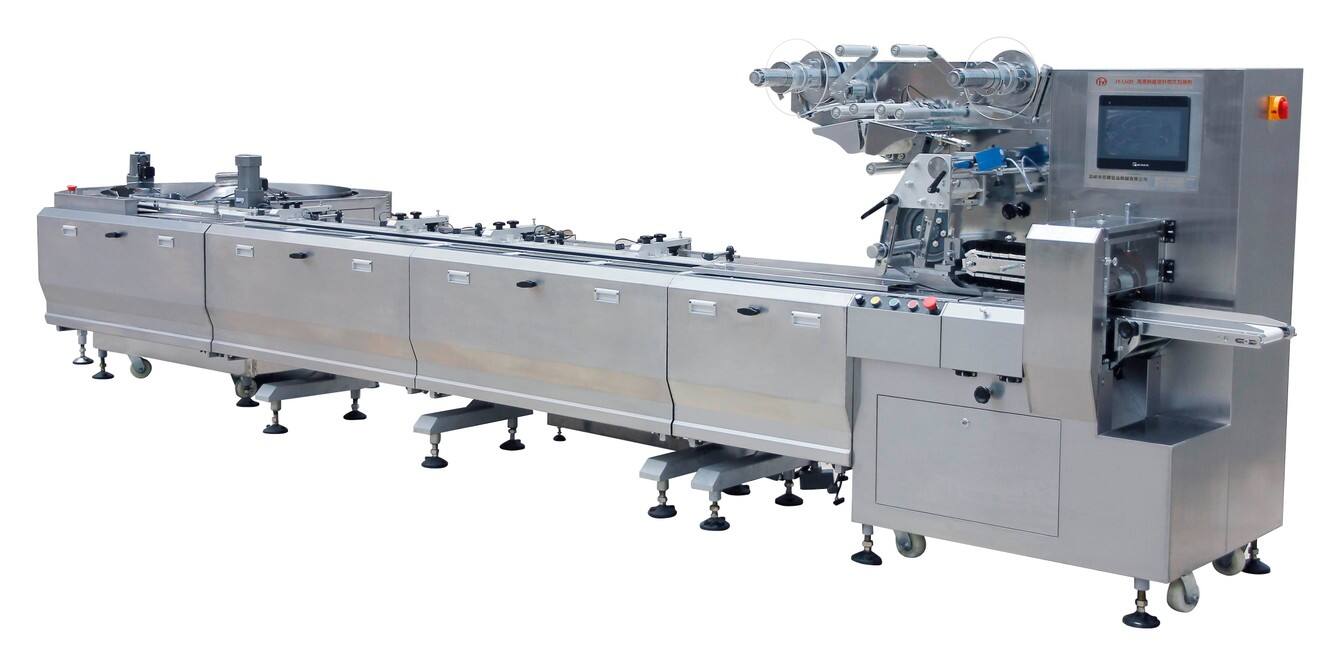
Scalable Performance: One Pillow Packing Machine for Every Production Tier
From Artisanal to Industrial: Matching 20–500 Biscuits/Minute Without Replatforming
A single pillow packing machine can serve biscuit producers across all scales—artisinal to industrial—when engineered for a true 20–500 biscuits-per-minute speed envelope. Artisanal bakeries begin at the lower end (20–50 packs/min), minimizing overpacking waste and safeguarding delicate product integrity. As demand grows, the same machine scales seamlessly to several hundred packs per minute—not through replacement, but via simple speed adjustments or targeted component swaps (e.g., sealing jaws or drive modules). This eliminates replatforming: the costly, production-halting practice of scrapping entire packaging lines when volume shifts. For a mid-size facility producing 10,000 biscuits daily, a unit running at 100 packs/min today can reliably handle 400 packs/min tomorrow—provided it was built from the outset for broad operational flexibility, not a fixed-speed niche.
Modular Architecture Enables Non-Disruptive Upgrades—Preserve CAPEX, Extend Lifespan
True scalability extends beyond speed—it lives in modularity. A well-designed pillow packing machine allows incremental, non-disruptive upgrades: adding a servo-driven film feed, upgrading sealing jaws, or integrating vision inspection—all onto the original frame. This preserves core investments in electrical cabinets, conveyors, and control systems while extending the machine’s functional lifespan by five to seven years. For a producer scaling from 80 to 300 biscuits per minute, such an upgrade typically costs just 20–30% of a new line and requires only a single-shift downtime for installation and calibration. The result is a packaging system that evolves with the business—adapting without obsolescence.
Cost-Effective Sourcing: Why China-Made Pillow Packing Machines Deliver Superior Value
30–45% Lower CAPEX vs. EU/Japan Alternatives—Without Sacrificing Core Packaging Performance
Chinese manufacturers now deliver pillow packing machines with 30–45% lower capital expenditure than comparable EU or Japanese models—without compromising on essential performance. Core functions—including film feeding, forming, sealing, and cut-off—meet equivalent speed, repeatability, and tolerance standards. Many suppliers integrate servo-driven sealing jaws and industrial-grade PLCs that match the precision and reliability of premium global brands. For a mid-size facility operating at 150 biscuits per minute, this translates to USD $20,000–$30,000 in upfront savings—funds that can be redirected toward complementary automation like checkweighers or metal detectors, all within the original budget.
Single-Supplier Integration: Film Handling, Sealing, Vision Inspection, and HMI in One Ecosystem
Beyond cost, Chinese OEMs offer integration advantages. Instead of managing multiple vendors for the pillow packer, film unwind stand, vision system, and HMI, producers receive a pre-integrated, factory-tested solution. This eliminates compatibility risks, cuts commissioning time by up to 40%, and consolidates after-sales support under one provider. The unified HMI controls sealing temperature, film tension, and reject logic in real time—reducing operator training time and minimizing human error. With spare parts, firmware updates, and troubleshooting handled through a single channel, total cost of ownership (TCO) drops significantly compared to fragmented, multi-vendor deployments.
Biscuit-Specific Packaging Excellence: Seal Integrity, Crispness Retention, and Hygiene Assurance
Biscuits demand packaging that protects crispness, prevents breakage, blocks moisture and oxygen ingress, and inhibits rancidity—especially in high-fat varieties. A dedicated pillow packing machine must deliver consistent, repeatable heat sealing across the full film web. Inconsistent seals compromise food safety, accelerate shelf-life degradation, and risk non-compliance with ISO 22000 and FDA 21 CFR Part 117 requirements. Reliable sealing isn’t just about strength—it’s about uniformity, timing, and thermal precision across variable speeds and film types.
Optimized Film Compatibility: PET/PE, CPP, and Metallized Laminates for Shelf‑Life & Texture Protection
Biscuit producers rely on engineered laminates that balance barrier performance with sealability. PET/PE films provide robust oxygen and moisture resistance while maintaining reliable seal initiation on high-speed lines. CPP (cast polypropylene) adds clarity and flexibility—critical for retail-ready pillow packs where visual appeal matters. Metallized laminates further elevate protection against light, oxygen, and aroma loss—key for premium shortbread or butter-rich biscuits prone to oxidation. When paired with precise, digitally controlled sealing parameters (temperature, dwell time, pressure), these films achieve optimal pouch integrity—extending shelf life by up to 40% and preserving texture throughout distribution.
Tangible Operational ROI: Speed, Consistency, and Labor Efficiency Gains
Adopting a purpose-built pillow packing machine delivers measurable, rapid ROI—not just through higher throughput, but via three interlocking improvements: accelerated cycle times, consistent seal quality, and steep labor reduction. Automation removes variability from manual handling, cutting product damage and rework while enabling predictable shift planning and on-time delivery. For mid-scale producers, these gains compound into lower cost-per-pack, tighter quality control, and stronger margin resilience.
68% Average Reduction in Direct Labor per Shift—Validated Across Mid-Scale Biscuit Facilities
Field data from 12 mid-scale biscuit facilities across Southeast Asia and Latin America confirms that a single automated pillow packing machine replaces up to six manual packers per shift. The fully integrated process—film feeding, forming, sealing, and ejection—requires only one operator for supervision and routine monitoring. This 68% labor reduction is achieved at sustained speeds of 80–150 packs per minute, with no trade-off in output consistency. Training time drops by 60% thanks to intuitive HMI-guided setup and diagnostics, and overtime expenses decline as the machine maintains steady performance across extended shifts. Factoring in labor savings, reduced scrap, and improved delivery reliability, the average payback period falls between 12 and 18 months.
FAQ Section
What is a pillow packing machine?
A pillow packing machine is a type of automated equipment designed to package products, typically food items such as biscuits, into plastic pouches shaped like a pillow. It is widely used for its ability to seal and protect products effectively.
How does modularity impact pillow packing machine upgrades?
Modularity allows for incremental updates, such as adding new components without replacing the entire machine. This enables biscuit producers to scale production without costly replatforming or extended downtime.
How do Chinese pillow packing machines compare to EU or Japanese models?
Chinese-made pillow packing machines offer similar performance, precision, and reliability to EU or Japanese models, but at a 30–45% lower cost. They are increasingly popular for delivering solid ROI along with integrated automation solutions.
Why is seal integrity essential for biscuit packaging?
Seal integrity is crucial as it ensures food safety, prevents moisture and oxygen ingress, protects crispness, and extends the shelf life of biscuits, especially high-fat varieties sensitive to oxidation.
What are the ROI benefits of automated pillow packing machines?
Automated machines improve speed, consistency, and labor efficiency, reducing costs per pack, training time, and manual errors. They deliver measurable gains that result in faster payback periods of 12–18 months on average.
Table of Contents
- Scalable Performance: One Pillow Packing Machine for Every Production Tier
- Cost-Effective Sourcing: Why China-Made Pillow Packing Machines Deliver Superior Value
- Biscuit-Specific Packaging Excellence: Seal Integrity, Crispness Retention, and Hygiene Assurance
- Tangible Operational ROI: Speed, Consistency, and Labor Efficiency Gains
- FAQ Section