
 EN
EN
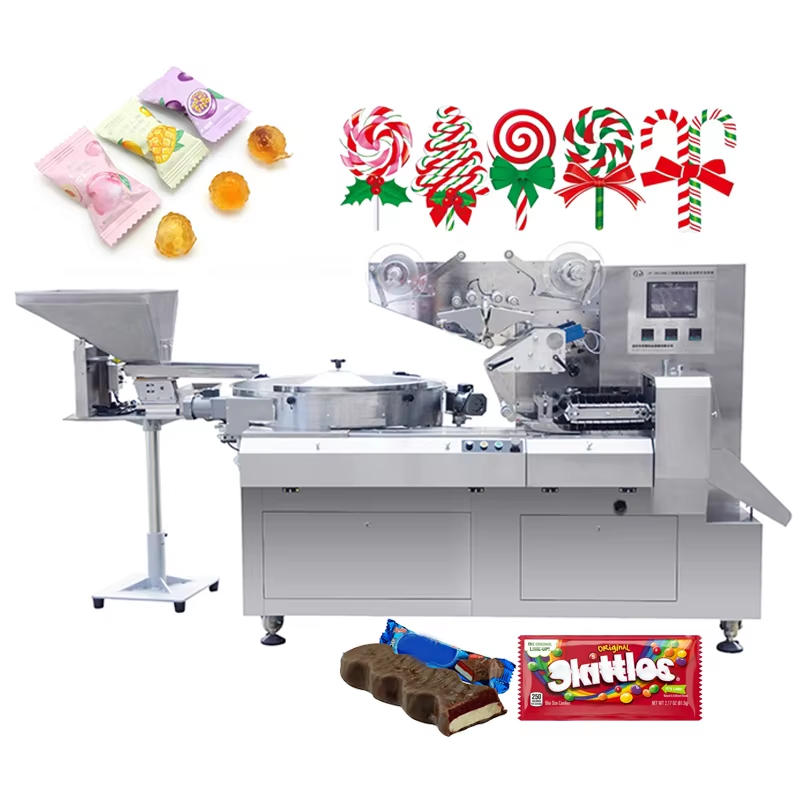
Horizontal Flow Packing Machine: Definition, Core Function, and Industry Role
A horizontal flow packing machine is an automated packaging system that encases products in flexible film via continuous horizontal motion. It forms sealed “pillow packs” around items—including baked goods, fresh produce, soap bars, and medical devices—using synchronized longitudinal and end-sealing mechanisms. By integrating precision film handling with reliable thermal sealing, it delivers consistent, hygienic, and shelf-ready packaging at high throughput. Its adaptability across product types and materials makes it a cornerstone of modern food, pharmaceutical, and consumer goods manufacturing—particularly where protection, shelf-life extension, and operational efficiency are critical.
The Form-Fill-Seal Process: Step-by-Step Flow Packing Machine Operation
A horizontal flow packing machine transforms a flat roll of film into finished packages through a fully integrated, continuous form-fill-seal (FFS) sequence. This synchronized process eliminates manual handling while ensuring product integrity, seal consistency, and output stability—even at speeds exceeding 200 packs per minute.
Film unwinding, forming collar shaping, and longitudinal sealing
The packaging film unwinds from a roll and passes through a forming collar, which shapes it into a tubular sleeve around the product as it moves horizontally on the conveyor. Heat and pressure are then applied to the overlapped film edges to create a continuous longitudinal seal—the backbone of the pillow pack. Precise tension control ensures the film remains taut and wrinkle-free during forming, directly supporting seal strength and visual uniformity.
End sealing, separation, and pillow-pack output dynamics
Once longitudinally sealed, the product-laden film advances to the end-sealing station. Here, heated jaws apply cross seals at programmed intervals to define each package’s front and rear boundaries. A rotary cutter simultaneously severs the film through the center of each end seal, yielding individual pillow-shaped packs. Servo-driven transport ensures exact registration between seal position and product placement, enabling clean separation and consistent package geometry. Finished units discharge onto a downstream conveyor for inspection or further processing—completing a seamless, high-efficiency cycle.
Critical Technical Systems Enabling Precision Flow Packing Machine Performance
Servo-driven indexing and PLC/HMI synchronization for ±0.3 mm accuracy
Modern horizontal flow packers achieve ±0.3 mm positional accuracy through servo-driven indexing systems—calibrated motors that precisely govern film advancement, product positioning, and sealing timing. This mechanical precision is fully integrated with industrial-grade PLCs and intuitive HMIs, enabling real-time monitoring and dynamic adjustment of parameters like seal dwell time, cutting phase, and tension setpoints. The result is stable performance across variable-speed operation (up to 200+ cycles/minute), eliminating manual recalibration and maintaining packaging fidelity regardless of product size or film type.
Photocell registration, tension control, and thermal dwell-time calibration
Consistent output quality relies on coordinated subsystems: photocell sensors detect printed marks or product edges to auto-correct film misalignment before sealing; electronic tension controls maintain optimal film tautness throughout high-speed travel; and intelligent thermal management dynamically adjusts sealing dwell time (±10 ms) based on film thickness, ambient temperature, and line speed. Together, these systems sustain 99% operational efficiency and hermetic seal integrity—without compromising material integrity or requiring operator intervention.
Product Suitability and Packaging Advantages of Horizontal Flow Packing Machines
Horizontal flow packers handle a broad spectrum of products—from delicate pastries and irregularly shaped snacks to sterile medical devices and pharmaceutical blister cards. Their adaptability stems from programmable PLC logic and fine-tuned film tension controls, allowing rapid configuration for varying dimensions, weights, and fragility levels. Compared to rigid packaging alternatives, they reduce film usage by up to 30%, support biodegradable and barrier-grade laminates, and deliver outputs of 200+ packs per minute. For perishables like sandwiches and ready-to-eat meals, oxygen-barrier sealing extends shelf life by up to 25%, as validated by independent food preservation studies. Key advantages include:
- Material flexibility: Full compatibility with mono-material recyclables, compostable films, and high-barrier laminates—supporting global sustainability standards
- Brand enhancement: Consistent high-gloss finishes, precise print registration, and uniform seals strengthen shelf impact and consumer trust
- Operational efficiency: Automated format changeovers cut downtime by up to 40%, accelerating time-to-market for new SKUs
- Hygiene compliance: Fully enclosed sealing zones and stainless-steel construction meet HACCP, FDA 21 CFR Part 117, and ISO 22000 requirements
FAQ
What is a horizontal flow packing machine?
A horizontal flow packing machine is an automated system designed to package products in flexible films, forming sealed "pillow packs" through a process that involves continuous horizontal motion.
What types of products can be packaged using a horizontal flow packing machine?
These machines can handle a wide range of products, such as baked goods, fresh produce, soap bars, snacks, medical devices, and pharmaceutical blister cards.
What is the form-fill-seal process in flow packing?
The form-fill-seal process involves forming a tubular sleeve around the product using film, longitudinally sealing it, and then applying cross seals to create individual packages—all in a continuous motion.
What technical features enhance the performance of horizontal flow packing machines?
Key technical features include servo-driven indexing, PLC/HMI systems for accuracy, photocell registration, thermal dwell-time calibration, and advanced tension control systems.
What are the advantages of horizontal flow packing machines?
These machines offer material flexibility, improved brand presentation, enhanced operational efficiency, and high compliance with hygiene standards, making them ideal for various industries.
Table of Contents
- Horizontal Flow Packing Machine: Definition, Core Function, and Industry Role
- The Form-Fill-Seal Process: Step-by-Step Flow Packing Machine Operation
- Critical Technical Systems Enabling Precision Flow Packing Machine Performance
- Product Suitability and Packaging Advantages of Horizontal Flow Packing Machines
-
FAQ
- What is a horizontal flow packing machine?
- What types of products can be packaged using a horizontal flow packing machine?
- What is the form-fill-seal process in flow packing?
- What technical features enhance the performance of horizontal flow packing machines?
- What are the advantages of horizontal flow packing machines?