
 EN
EN
Boosting Throughput with High-Speed Candy Packaging Machine Automation
Servo-Driven Motion Control Eliminates Mechanical Bottlenecks
Old fashioned mechanical systems used in candy packaging tend to hit speed barriers because of all those tiny tolerance errors that build up over time plus the constant vibrations. Servo driven systems work differently though. Instead of relying on complicated gear trains, they use separate motors for each axis that can be programmed individually. This setup gets rid of that annoying backlash when feeding and sealing films, and lets operators change speeds instantly when switching between different product types. With closed loop feedback, these machines stay super accurate too - around plus or minus 0.1mm positioning even when running at 400 cycles per minute. That kind of precision cuts down on misfeeds by about two thirds compared to older cam based systems. The smoother acceleration patterns really make a difference too. No more jamming or misaligned products, which is huge when dealing with something fragile like chocolate bars or gooey caramels that stick together. Plus there's another benefit nobody talks about much but everyone appreciates: maintenance becomes way easier since individual servo parts can just be swapped out without taking apart whole sections of machinery.
Real-World Impact: 42% Line-Speed Increase After Retrofitting Legacy Candy Packaging Machines
A European confectioner retrofitted its 15-year-old horizontal flow wrappers with servo-driven components—including direct-drive servo tensioners, vision-guided registration, and predictive motion algorithms—achieving transformative throughput gains. Over six production cycles, results included:
| Metric | Before Retrofit | After Retrofit | Improvement |
|---|---|---|---|
| Output (units/min) | 120 | 170 | +41.7% |
| Changeover Time | 45 min | 8 min | -82% |
| Film Waste | 8.2% | 1.9% | -77% |
Energy consumption dropped 18% due to optimized motor actuation, and annual maintenance costs fell by $37k. The retrofit paid for itself in 11 months through increased capacity utilization alone—proving modern automation can extend the productive life of legacy candy packaging machines without full replacement.
Minimizing Waste Through Precision Film Handling in Candy Packaging Machines
These days, precision film handling systems have become essential for cutting down waste in candy packaging operations. Older production lines typically allowed film variations over 8% without much concern, but new equipment comes equipped with built-in vision tech that keeps track of tension throughout the roller system. The machines can tweak settings as many as 100 times every second, bringing variation levels down to just 1.3%. For most standard production lines, this means about 1.2 miles of film saved each week. Such accuracy brings several advantages worth mentioning:
- Eliminates film buckling during high-speed operations
- Prevents material overstretch, preserving seal integrity
- Reduces misalignment-related rework by 67%
Vision-Guided Tension Control Cuts Film Variance from ±8% to ±1.3%
Machine vision cameras running at 200 frames per second keep an eye on where the film edges are positioned, sending live data to those servo controlled tensioners that keep everything just right no matter how fast or slow the production line runs. The whole setup works as a closed loop system that stops problems before they happen. Too much slack leads to wrinkles, too tight creates tears in the material. This approach has cut down variation by around three quarters according to recent measurements. And there's something else going on behind the scenes too self learning algorithms tweak the tension settings based on what kind of film is being processed. They know when to adjust for polypropylene films compared to polyethylene ones, making sure each gets treated properly for best results.
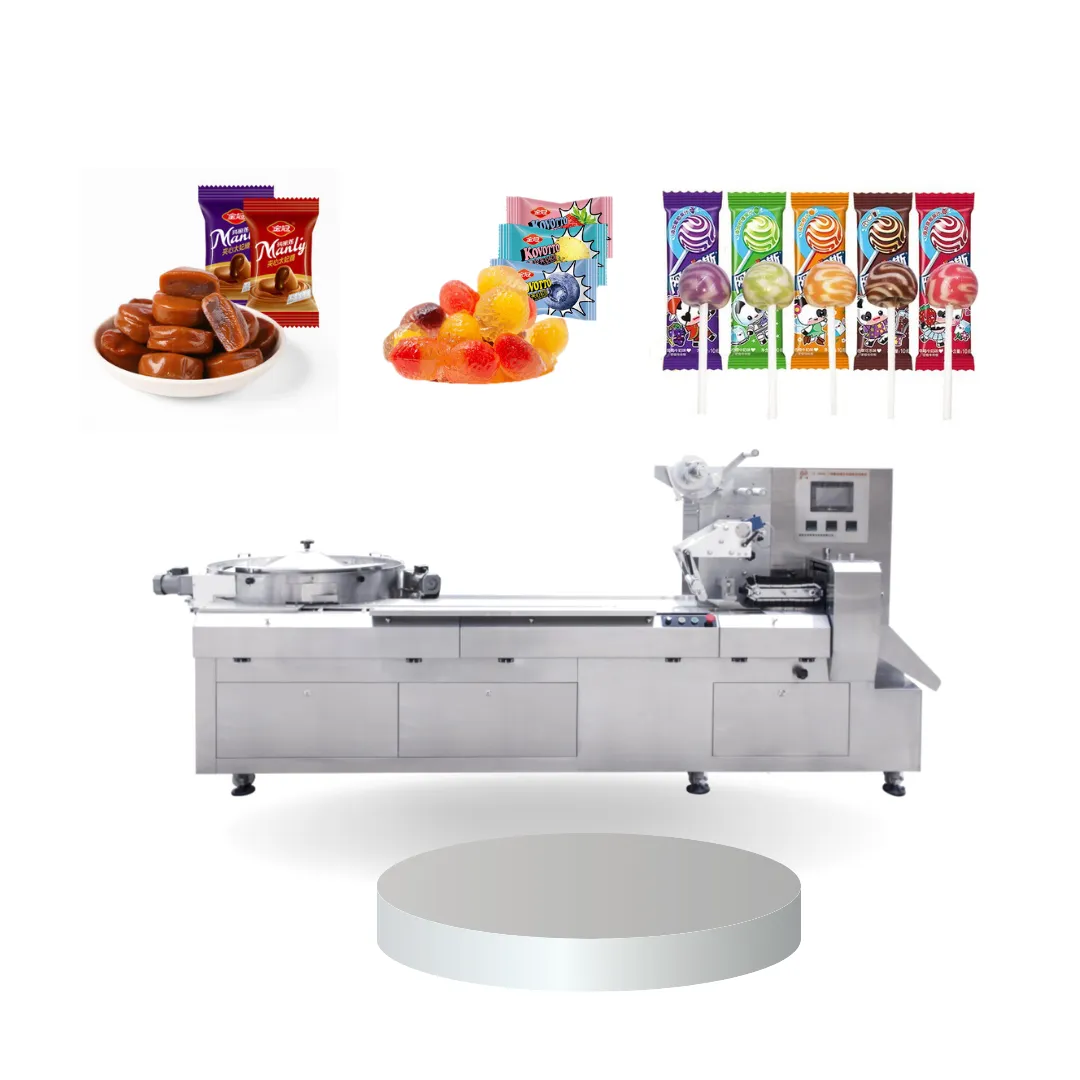
Shape-Aware Feed Adjustment Ensures Optimal Wrap for Gummies, Jellies, and Chews
Back in the day, all those oddly shaped candies were causing major headaches with film waste because they just wouldn't feed properly into packaging lines. Now modern systems have come a long way thanks to 3D laser scanners that basically create instant digital copies of every candy as it moves along. These smart systems then tweak conveyor speeds and adjust where the robotic grippers grab based on what they see. The softer stuff like gummy bears needs special care so they don't get squished during handling, while the harder jellies can take a bit more forceful approach when being placed. Companies have built up an impressive database of shapes covering well over 200 different types of sweets and snacks. This has made quite a difference actually cutting down on trim waste by almost 30 percent compared to old fashioned mechanical guide systems from years ago.
Reducing Labor Dependency via Integrated Candy Packaging Machine Supervision
Supervision systems that integrate everything into one platform really help streamline operations by taking over much of what used to require hands-on monitoring without letting quality slip. When these systems automatically track things like how tight the film stays during production, whether seals hold properly, and how fast products come off the line, they can fix issues right away. This cuts down on how many people need to do quality checks all day long something that plants have seen drop around 60 percent in some cases. Production facilities also notice about 20 percent fewer unexpected shutdowns and see their output go up roughly 15 percent higher overall. Plus, when equipment starts showing signs it might fail soon, maintenance crews get warned ahead of time so they don't have to rush in during emergencies as often. The best part? With unified control panels, supervisors can watch several production lines at once instead of bouncing between them constantly. What was once a major problem because there just weren't enough skilled workers becomes something companies can actually plan for and manage better now.
FAQ
What are the benefits of retrofitting old machinery with modern automation?
Retrofitting old machines with modern components can significantly increase output, reduce waste, cut energy consumption, and lower maintenance costs without needing a full replacement. Improvements like a 42% line-speed increase have been documented.
How do vision-guided tension controls enhance film handling?
Vision-guided controls use cameras to monitor film positioning and adjust tension in real-time, reducing film variance from ±8% to ±1.3%, eliminating issues such as buckling and tears.
What impact does reducing labor dependency have?
Integrating supervisory systems can cut labor needs for quality monitoring by about 60% while reducing unexpected line shutdowns and increasing overall productivity.
How do servo-driven systems improve candy packaging machines?
Servo-driven systems replace mechanical components with individually controlled motors, reducing backlash and increasing speed and precision. This allows for smoother transitions between product types and reduces misfeeds and maintenance requirements.