
 EN

In modern food manufacturing, the pillow packing machine has become essential for biscuit producers seeking competitive advantage. These systems deliver consistent, rapid packaging that meets strict quality standards while reducing labor costs and material waste. The technology represents a significant shift from manual wrapping toward fully automated, precision-driven production environments.
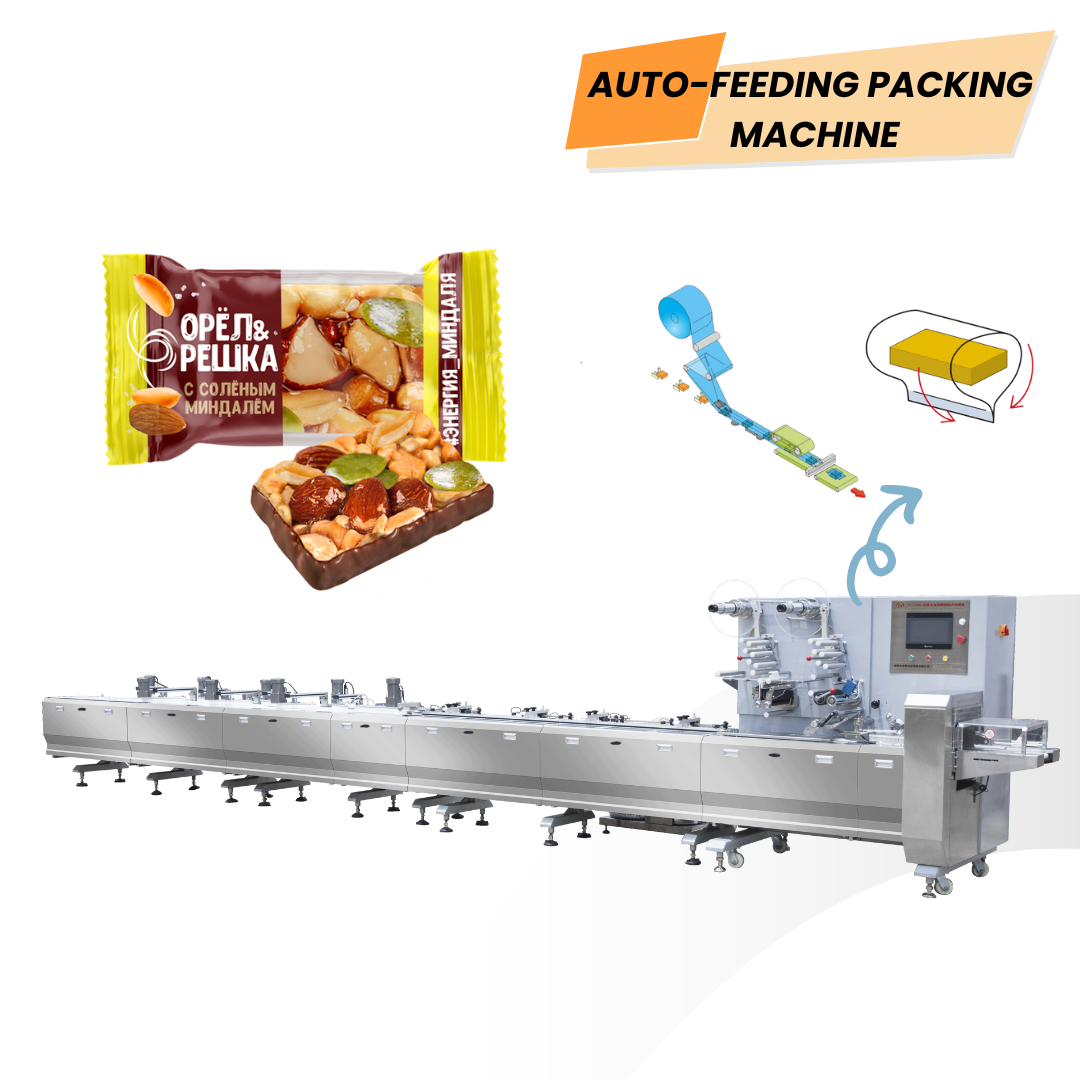
Biscuit manufacturers face constant pressure to increase throughput without compromising product integrity or package quality. A pillow packing machine addresses these demands through precision engineering, advanced servo controls, and intelligent motion systems that work in seamless coordination. Understanding how these machines improve operational performance helps food producers make informed investment decisions aligned with their production growth targets.
How Pillow Packing Machines Enhance Production Speed
Automated Wrapping Efficiency
The pillow packing machine operates at speeds that far exceed manual packaging capabilities, typically processing 80 to 300 packages per minute depending on product size and machine configuration. Each cycle involves precise film feeding, product placement, sealing, and cutting operations executed with millisecond timing. This automation eliminates human delays and inconsistencies inherent in manual wrapping, allowing manufacturers to meet large order volumes without expanding workforce requirements significantly.
Film advancement mechanisms in a pillow packing machine use servo-driven systems that synchronize with product conveyors, ensuring no packaging step ever becomes a bottleneck. When biscuits arrive at constant intervals, the machine responds with perfectly timed wrapping cycles. This synchronization directly translates to throughput increases of 40 to 60 percent compared to semi-automated alternatives.
Reduced Cycle Time and Labor Dependency
Traditional manual biscuit packaging requires multiple operators working simultaneously, each performing distinct tasks like wrapping, sealing, and labeling. A pillow packing machine consolidates these operations into one continuous workflow, dramatically reducing operator involvement to supervision and material replenishment only. The reduction in manual touchpoints not only accelerates packaging but also minimizes downtime associated with operator fatigue, breaks, or shift changes.
For high-volume biscuit producers, this labor efficiency gain translates directly to cost savings and improved line reliability. A single operator can now oversee two or more pillow packing machine lines simultaneously, creating operational leverage that scales profitably as production volumes grow.
Precision and Accuracy Advantages
Consistent Seal Quality and Defect Reduction
The pillow packing machine delivers extraordinarily consistent seal strength and positioning across every package produced. Thermal elements maintain precise temperature profiles, ensuring film fusion occurs uniformly without burning, weak spots, or premature opening. This consistency directly improves shelf-life and protects product freshness throughout distribution channels, reducing customer complaints and returns related to packaging failure.
Accuracy in seal placement also prevents biscuit breakage during filling, since the machine applies controlled pressure rather than human handling that often compresses or deforms delicate products. Computer-controlled sensors detect film tension in real-time and adjust settings automatically, maintaining quality even as film thickness or moisture content varies slightly between production batches.
Measurement Precision and Portion Control
Modern pillow packing machines incorporate optical and weight-based detection systems that verify correct product quantity per package with accuracy exceeding 99 percent. This precision prevents costly overfilling or underfilling scenarios that damage profitability and regulatory compliance. Each biscuit or biscuit cluster is positioned exactly before wrapping, ensuring uniform appearance and customer satisfaction.
Such accuracy becomes especially critical for premium biscuit products sold by weight or count. The pillow packing machine eliminates subjective judgment from packaging decisions, delivering measurable compliance with net weight declarations and nutritional labeling requirements across different markets.
Operational and Commercial Benefits
Material Waste Reduction and Cost Efficiency
Precise film cutting and minimal scrap generation represent significant cost advantages of the pillow packing machine. Traditional methods often waste 3 to 8 percent of packaging film due to imprecise cuts and failed seals requiring rework. Automated systems reduce film waste to under 1 percent through exact measurement and servo-controlled cutting mechanisms. Over millions of packages annually, this waste reduction alone justifies equipment investment.
Additionally, the pillow packing machine optimizes film usage by calculating exact lengths needed for each package size, eliminating oversized wrapping that increases material cost without adding protection value. This efficiency advantage compounds significantly when producing multiple biscuit varieties with different package dimensions on the same line.
Flexibility and Product Adaptability
Modern pillow packing machines feature quick-change modules that allow operators to adjust wrapping specifications within minutes, supporting product mix changes and seasonal biscuit varieties. Film width, sealing temperature, cutting positions, and speed settings can be reprogrammed and stored for instant recall when switching between biscuit types. This flexibility enables manufacturers to respond rapidly to market demand shifts without idle downtime or specialized technical intervention.
The machine's adaptability also extends to label positioning and product orientation, ensuring branded messaging displays correctly regardless of package format. Such versatility makes the pillow packing machine a strategic investment for producers managing diverse product portfolios.
FAQ
What factors should guide selection of a pillow packing machine for biscuit production?
Key selection factors include required throughput capacity, product dimensions and fragility levels, available factory floor space, film types supported, and integration compatibility with existing conveyors and labeling systems. Budget constraints and after-sales service availability in your region should also influence the decision. Consulting with equipment suppliers about your specific biscuit specifications ensures you choose a machine optimized for your operational requirements rather than oversized or undersized alternatives.
How does a pillow packing machine impact product freshness and shelf-life?
By creating consistently tight seals that exclude oxygen and moisture, the pillow packing machine extends biscuit shelf-life significantly compared to loose or variable manual wrapping. Precise film selection combined with rapid sealing minimizes product exposure to air during packaging, preserving crispness and flavor integrity. Nitrogen-flush options available on advanced machines further enhance preservation by replacing oxygen with inert gas before final sealing.
Can a pillow packing machine handle different biscuit sizes and shapes?
Yes, most modern pillow packing machines accommodate product size variations through adjustable feeding mechanisms, film width settings, and seal positioning controls. However, extreme shape differences or very fragile products may require specific machine configurations or protective inserts. Consulting equipment manufacturers about your product range ensures the selected machine can handle your portfolio without compromising speed or accuracy across all variants.