
 EN
EN
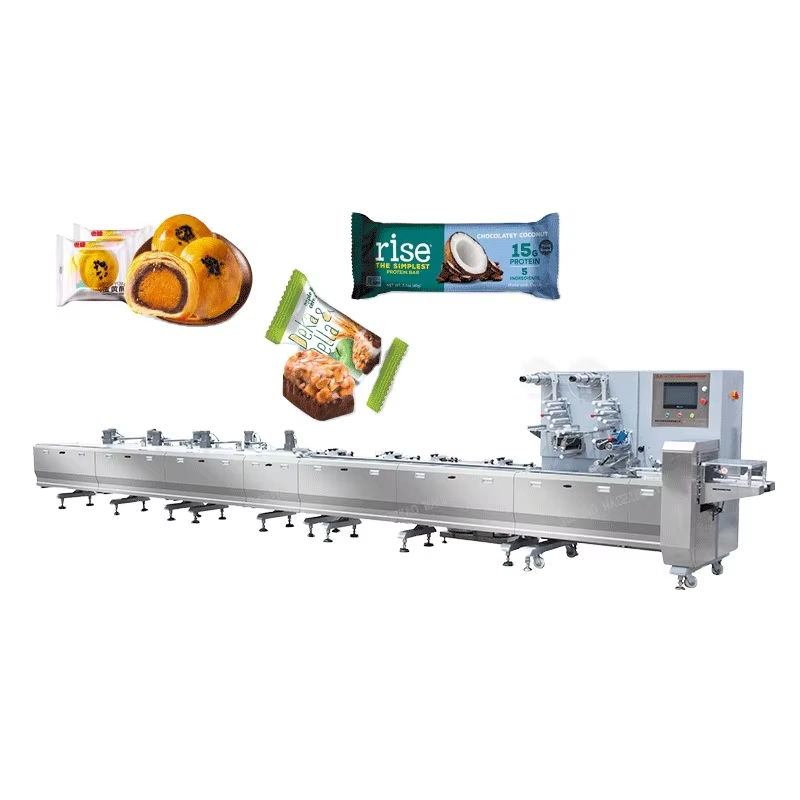
In today's competitive manufacturing environment, packaging speed and accuracy are no longer optional advantages — they are baseline requirements. A flow packing machine addresses both demands simultaneously, allowing production facilities to seal more products per minute while maintaining consistent wrap quality across every single unit. Whether a facility handles bread, candy, chocolate bars, or hardware components, the flow packing machine has become a central asset on modern packaging lines.
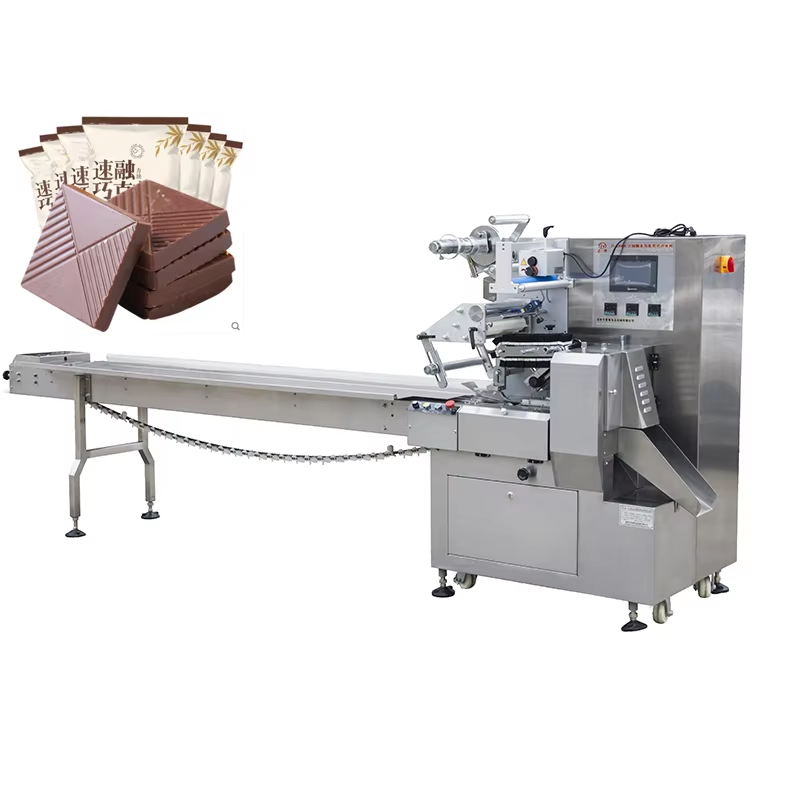
The core function of a flow packing machine is to wrap individual items in a continuous film, creating a sealed pillow-style package at high throughput. Unlike manual wrapping or semi-automated alternatives, a fully automatic flow packing machine controls film tension, sealing temperature, and cut timing with precision that human operators simply cannot replicate at scale. This article explores exactly how a flow packing machine improves speed and accuracy across different production scenarios and why facility managers consistently choose this technology for demanding packaging applications.
The Mechanics Behind a Flow Packing Machine
How the Horizontal Feed System Works
A flow packing machine operates on a horizontal axis, meaning products are fed into the machine along a conveyor belt and then enveloped by a film that wraps around them continuously. The film is drawn from a roll, formed into a tube around the product, and sealed longitudinally along the bottom. End seals are then applied at precise intervals to cut and close each individual package. This horizontal flow packing machine design is highly efficient because the product never needs to be lifted, rotated, or repositioned during the wrapping cycle.
The speed of a flow packing machine depends on the film feed rate, the servo-driven conveyor, and the sealing jaw cycle time. High-performance flow packing machine models can process several hundred packs per minute when handling small, uniform products like individually wrapped candies or granola bars. The flow packing machine achieves this throughput without sacrificing seal integrity, which directly reduces waste and rework rates on the production floor.
Precision Control Systems in a Flow Packing Machine
Modern flow packing machine units are equipped with programmable logic controllers and touchscreen interfaces that allow operators to store and recall packaging programs for different product types. When a facility switches between products, the flow packing machine can load a saved profile that automatically adjusts film length, sealing temperature, and belt speed. This digital precision dramatically reduces the human error that causes misaligned seals, overfilled packages, or film tears.
Sensors built into the flow packing machine detect product position and trigger the cutting mechanism at exactly the right moment. If a product is absent or misaligned, the flow packing machine can pause or reject that cycle, preventing wasted film and mislabeled packages. This level of machine-driven accuracy is one of the strongest reasons why a flow packing machine outperforms older wrapping technologies in quality-sensitive environments.
Speed Improvements Delivered by a Flow Packing Machine
Continuous Motion vs. Intermittent Packaging
A key speed advantage of a flow packing machine is its continuous-motion sealing capability. Older intermittent machines stop momentarily to apply end seals, limiting their output ceiling. A continuous-motion flow packing machine keeps the product and film moving simultaneously while the sealing jaws rotate alongside, applying heat and pressure without interrupting the line. This means a flow packing machine operating in continuous mode can achieve significantly higher output rates than equivalent intermittent systems handling the same product.
For high-volume food producers, the speed of a flow packing machine translates directly into lower cost per unit and greater ability to meet retail demand peaks. A flow packing machine running at full capacity can eliminate bottlenecks that previously required multiple slower machines or additional shifts. The result is a leaner, faster production line where the flow packing machine anchors overall line efficiency.
Reduced Downtime Through Automatic Film Splicing
Traditional film changeovers require the line to stop while operators thread new rolls. An advanced flow packing machine can include automatic film splicing systems that join a new roll to the expiring one without halting production. This feature keeps the flow packing machine running continuously for longer periods, reducing the cumulative downtime that erodes daily output targets. When every minute of machine time counts, automatic splicing on a flow packing machine becomes a measurable competitive advantage.
Accuracy Gains That Define a Flow Packing Machine
Consistent Seal Quality Across Every Pack
Seal quality is one of the most critical accuracy metrics for any packaging operation, and a flow packing machine delivers consistent results through temperature-controlled sealing jaws. The flow packing machine maintains precise jaw temperature within a narrow range, ensuring that every end seal bonds the film correctly without burning, peeling, or leaving gaps. Consistent seals protect product freshness, reduce returns, and support brand presentation standards that retailers require.
When a flow packing machine is properly calibrated, the variation between packages is minimal. Film length per pack, seal placement, and cut position all remain within tight tolerances across thousands of consecutive cycles. This repeatability is what makes a flow packing machine suitable for products that must meet strict weight and appearance specifications, such as chocolate bars, medical devices, or precision hardware components.
Film Registration and Print Alignment
Many packaging films include printed graphics, barcodes, or branding elements that must appear in a specific position on the finished pack. A flow packing machine with eye-mark registration uses a photosensor to detect printed registration marks on the film and adjusts the cut position accordingly. This means the flow packing machine delivers print-accurate packages every time, eliminating the misaligned graphics that can cause retail rejection or consumer confusion.
Print registration on a flow packing machine is especially important for branded consumer goods where label positioning affects shelf appeal. The flow packing machine handles this automatically, reducing the need for manual inspection or reprinting. When a facility upgrades to a flow packing machine with full registration capability, it typically sees a significant reduction in packaging defect rates and a corresponding improvement in customer satisfaction scores.
FAQ
What types of products are best suited for a flow packing machine?
A flow packing machine works well with regularly shaped solid items such as candy bars, biscuits, bread rolls, chocolate blocks, fresh produce trays, and small hardware parts. The flow packing machine requires products that maintain their shape during horizontal conveying and can tolerate the light pressure applied during wrapping. Irregularly shaped or very fragile items may need special infeed arrangements to work properly with a flow packing machine.
How does a flow packing machine handle different film materials?
A flow packing machine is compatible with a wide range of flexible film materials including polypropylene, polyethylene, laminated films, and biodegradable options. The operator adjusts the sealing temperature and tension settings on the flow packing machine to match the specific film type being used. Most modern flow packing machine models store these settings as saved programs, making material changeovers quick and repeatable without requiring manual recalibration each time.
Is a flow packing machine difficult to maintain?
A flow packing machine is designed for industrial continuous use and typically requires routine maintenance such as cleaning the sealing jaws, lubricating moving parts, and inspecting conveyor belts. Most flow packing machine manufacturers provide maintenance schedules and diagnostic alerts through the machine's control panel, making it straightforward for trained operators to keep the flow packing machine running at peak performance. With proper care, a flow packing machine can deliver reliable service for many years in demanding production environments.