
 EN
EN
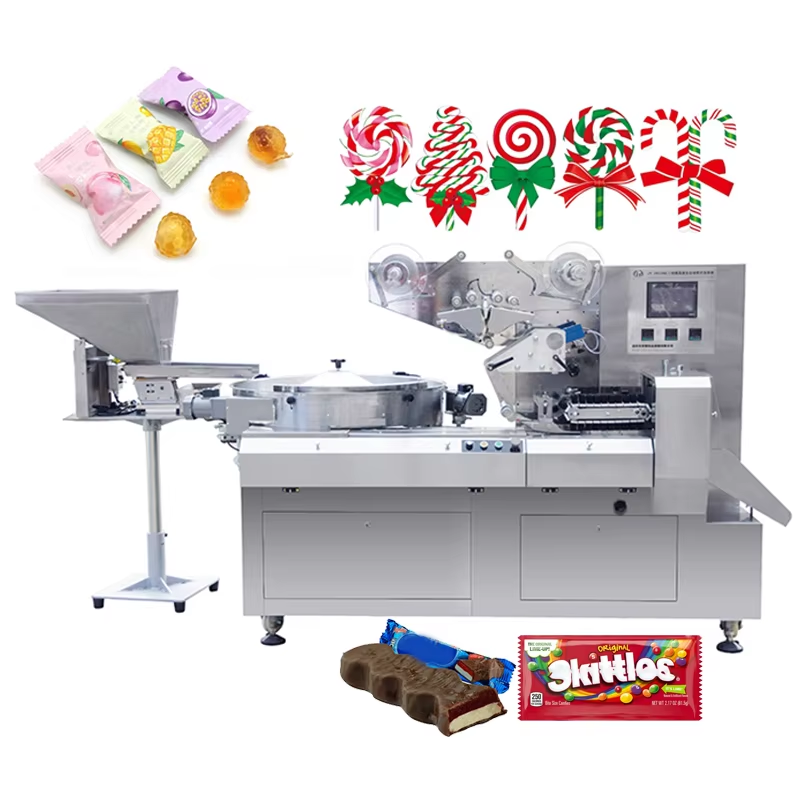
Accelerating Throughput with High-Speed Chocolate Packaging Machines
Speed benchmarks: 120–300+ packs/minute and what drives scalability
Modern chocolate packaging machines achieve production speeds of 120–300+ packs per minute through servo-driven motion systems and PLC (Programmable Logic Controller) automation. Three key factors enable this scalability:
- Modular tooling, allowing rapid changeovers between chocolate formats without mechanical reconfiguration
- Integrated feeding systems, synchronizing product inflow with wrapping cycles to eliminate bottlenecks
- Precision sensors, maintaining high velocity while ensuring consistent seal integrity
High-output models leverage these features to reduce downtime by up to 30% compared to conventional equipment–directly increasing hourly yield without compromising quality.
Real-world impact: How integrated chocolate packaging machines scaled confectionery output by 40%
One major candy maker recently overhauled their production with an automated system that includes inline nitrogen flushing and robots for case packing. Daily output shot up by around 40% because all the different parts of the packaging process now work together smoothly. The touchscreen interface cut down on labor expenses by nearly 20%, and those fancy lasers fixed alignment issues with seals so good that machines run almost constantly at 99.2% uptime. What really stands out though is this closed loop feedback system that catches wrapping problems instantly. No more stopping the line for fixes means the whole operation can keep growing instead of hitting arbitrary capacity limits. Manufacturers are starting to see automation not just as efficiency gains but as actual business growth engines when done right.
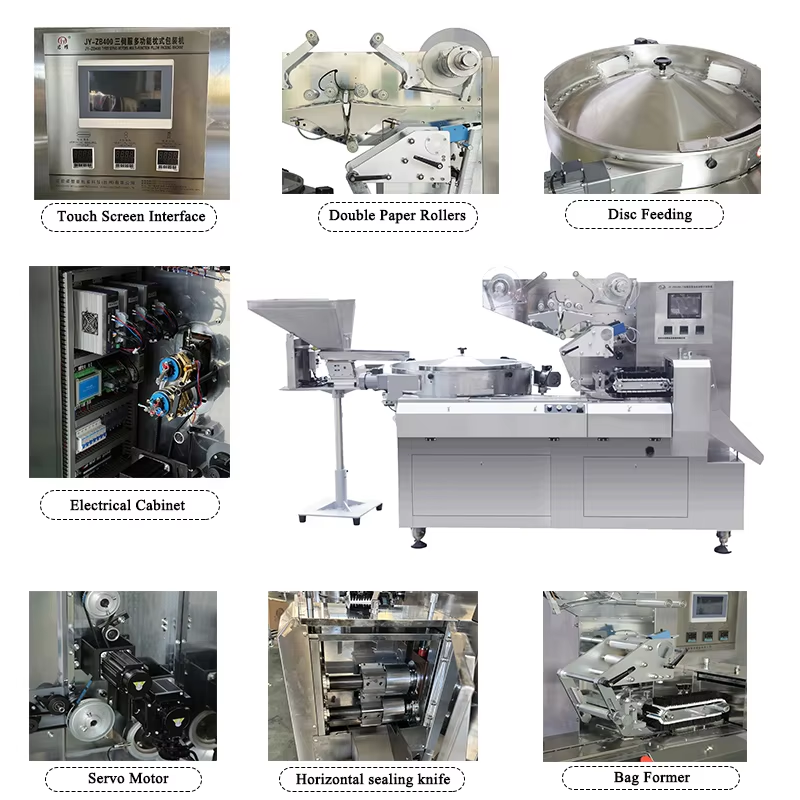
Guaranteeing Packaging Consistency via Precision Automation
Precision automation transforms packaging from an error-prone manual process into a rigorously controlled system. For chocolate–where inconsistent seals or misaligned wrappers directly compromise shelf life and brand perception–automated machines deliver micron-level accuracy across three critical dimensions.
Tight Tolerances in Weight, Seal Alignment, and Form-Fill-Seal Repeatability
Today's advanced systems keep weight differences below ±0.2 grams thanks to load cell tech, which stops those annoying customer complaints when packages come up short and also saves money on wasted overfills. When it comes to sealing, these machines hold alignment within just ±0.5mm because of their laser guided setup. And don't forget about the servo driven form fill seal units that create exactly the same folds every single time through thousands of production runs. All this consistency means no more leakers causing that ugly chocolate bloom effect we all hate. Plus there's around a 30 percent cut in packaging waste compared to old school manual methods. For products sensitive to moisture, this kind of precision really makes all the difference in shelf life and quality control.
Sensor-Guided Feedback Loops That Correct Deviations in Real Time
The integrated vision systems work alongside thermal sensors to check every package at over 200 frames per second. They spot issues such as weak seals or labels that are printed wrong. If something goes outside the normal range, say when the seal temperature drops by about 5 degrees Celsius, machine learning kicks in to tweak things like pressure settings, heating levels, or how fast the conveyor moves. This kind of feedback loop stops whole batches from being rejected because it catches problems early before too many bad units build up. As a result, companies save around 25% on rework expenses and maintain better than 99.8% system availability even during maximum production runs.
By converting manual variables into digital constants, precision automation ensures every chocolate bar arrives in retail condition–preserving flavor, texture, and brand integrity from factory to consumer.
Preserving Quality: Sealing Integrity and Shelf-Life Extension
Hermetic sealing technologies (e.g., heat-seal, cold-seal, nitrogen-flush integration) in modern chocolate packaging machines
Better sealing tech helps stop chocolate from going bad over time. Heat sealing works at temperatures around 120 to 180 degrees Celsius, melting packaging layers together so they form a barrier against moisture that causes sugar bloom on the surface. Cold sealing is another approach that uses special adhesives activated by pressure, which makes it great for delicate chocolates that might lose their texture if exposed to heat. When companies want top quality products, they often integrate nitrogen flush systems into their packaging process. These systems replace air inside the package with inert gas before sealing, which stops oxidation and keeps fats from moving around in the chocolate. According to industry research, when packages are sealed properly using these advanced methods, shelf life increases anywhere from 30% to 50% compared to older manual techniques. Modern equipment also includes sensors that detect tiny leaks in real time, allowing machines to adjust pressure settings automatically. This prevents failed seals that could ruin batches of chocolate, sometimes reducing usable product by as much as 80%. And all this happens without affecting how the chocolate feels when bitten into, looks shiny, or melts on the tongue.
Optimizing TCO and ROI Through Chocolate Packaging Machine Automation
Automated chocolate packaging machines deliver measurable Total Cost of Ownership (TCO) reductions and accelerated ROI by minimizing four key operational expenses:
- Labor dependency: Automation reduces staffing needs by 60–75% compared to manual lines, directly lowering recurring payroll costs
- Material waste: Precision filling mechanisms limit product giveaway to €0.5%, versus 2–3% in semi-automatic systems
- Energy consumption: Modern servo-driven components consume 15–25% less power than legacy pneumatic machines
- Unplanned downtime: Predictive maintenance capabilities cut repair costs by 40% and raise Overall Equipment Effectiveness (OEE) to €85%
Industry data shows ROI typically occurs within 18–30 months through combined throughput gains and waste reduction. For high-volume producers running at 200+ packs/minute, automated lines generate $3–5M in annual savings versus manual alternatives–making automation not just an efficiency upgrade, but a strategic investment in scalable profitability.
FAQ Section
What are the key benefits of using automated chocolate packaging machines?
Automated chocolate packaging machines offer significant benefits, including increased production speeds, enhanced precision, reduced labor dependency, lower material waste, decreased energy consumption, and minimized downtime. These advantages result in improved Total Cost of Ownership (TCO) and accelerated Return on Investment (ROI).
How do chocolate packaging machines ensure packaging consistency?
Chocolate packaging machines employ precision automation techniques, such as tight tolerances in weight and seal alignment, sensor-guided feedback loops, and real-time adjustments, to ensure packaging consistency. This level of precision helps maintain product quality and prolongs shelf life.
What kind of sealing technologies are used in modern chocolate packaging machines?
Modern chocolate packaging machines use advanced sealing technologies, including heat-seal, cold-seal, and nitrogen-flush integration. Heat-seal technology creates barriers against moisture, cold-seal technology is ideal for delicate chocolates, and nitrogen-flush systems prevent oxidation for extended shelf life.
How effective are chocolate packaging machines in reducing operational costs?
Chocolate packaging machines significantly reduce operational costs by minimizing labor dependency, limiting material waste, reducing energy consumption, and preventing unplanned downtime. These factors contribute to a lower Total Cost of Ownership and faster ROI.
Table of Contents
- Accelerating Throughput with High-Speed Chocolate Packaging Machines
- Guaranteeing Packaging Consistency via Precision Automation
- Preserving Quality: Sealing Integrity and Shelf-Life Extension
- Optimizing TCO and ROI Through Chocolate Packaging Machine Automation
-
FAQ Section
- What are the key benefits of using automated chocolate packaging machines?
- How do chocolate packaging machines ensure packaging consistency?
- What kind of sealing technologies are used in modern chocolate packaging machines?
- How effective are chocolate packaging machines in reducing operational costs?